Choi Hyung-guk's Column (16) Doing Your Best in Given Circumstances
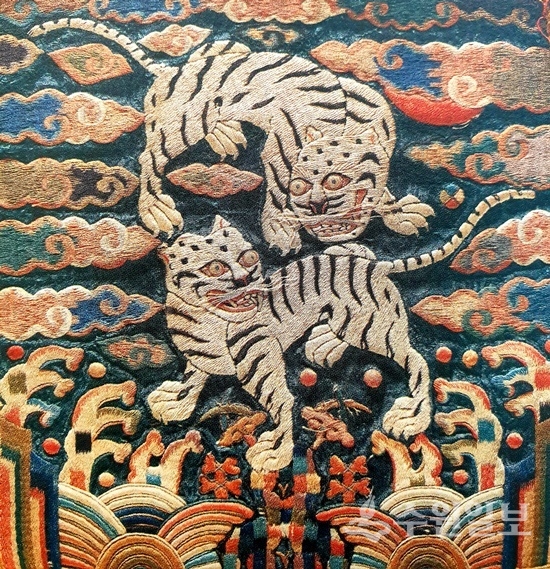
Everyone faces different circumstances. And those circumstances constantly change. Problems arise when we fail to adapt to change or when we forcibly create change. The most important thing in this process is to examine one's mind and develop constancy of heart (恒心). When the wind blows, we sway; when it rains, we get wet. But when the sun shines again, we open our arms to welcome it.
The military is where such change must be best understood. If the enemy's tactics change but we fail to comprehend them, we cannot conduct proper warfare. The Imjin War of 1592 is a prime example. From its founding, Joseon recognized the Jurchen of the north as its primary adversary and built its tactical formations around reinforced cavalry as a countermeasure. During the reign of King Sejong, when the Four Garrisons and Six Posts were established and territorial expansion was envisioned, operations were conducted using the cavalry-centered Five Guards Formation (五衛陣法).
Even when Japanese pirate raids, including the Eulmo Disturbance (乙卯倭變), occurred at the three ports, Joseon forces defended primarily with cavalry. When Japanese pirates who arrived by ship landed on shore, it was efficient for cavalry to pursue them rapidly and defeat the smaller forces individually.
However, the Imjin War was different. Both its scale and duration were fundamentally unlike the smaller conflicts of the past. Over a hundred thousand Japanese troops spread across the entire Korean peninsula from Busan as their starting point, plunging the whole land into war. General Shin Rip (申砬), who led the Battle of Tanjin after abandoning Joryeong Pass, concentrated everything on cavalry tactics and thus met a tragic end.
During the war, Japan employed muskets (個人火器) as ranged weapons and presented Japanese swords and long spears as close-quarters arms on the front lines, attempting new tactics to break Joseon's cavalry formations. As a result, the capital fell in less than twenty days after landing, and Gyeongbokgung burned. King Seonjo was forced to flee to Pyongyang.
The Training Command (訓鍊都監) that we learned about in Korean history classes during school was hastily created to overcome these tactical limitations. The new tactics employed by this unit involved the Three-Hand Soldier (三手兵) system: training together musketeers (砲手), archers (射手), and spearmen/swordsmen (殺手). Local armies were also reorganized into the Bundled Five-Man System (束伍軍), driving tactical change.
However, the shift to infantry-centered tactics, which was made to counter the Japanese army, became disrupted again after the Second Manchu Invasion. The Qing Dynasty maintained a cavalry-based tactical system centered on rapid mobile warfare rather than close-quarters infantry combat. One key reason King Injo became isolated at Namhansanseong was the inability to withstand the rapid southern advance of Qing cavalry vanguards. He had intended to flee to Ganghwa Island but the enemy cavalry had already advanced to present-day Bulgwang-dong in Seoul. Thus he hastily fled instead to Namhansanseong, in the opposite direction from Ganghwa.
Joseon forces had to reinforce cavalry tactics again. This is also the substantive reason why six mounted martial arts techniques, including spear techniques on horseback and mounted staff techniques, were added to the martial arts manual 『Illustrated Manual of the Martial Arts (武藝圖譜通志)』 compiled during the reign of King Jeongjo. In given circumstances, one can survive only by constantly preparing and transforming oneself.
The same applies to martial arts training. First and foremost is maintaining one's physical condition to face an opponent at any time. Then, within that physical stability, one analyzes the opponent's movements, adds unceasing training, and ultimately finds peace of mind.
In the 『Illustrated Manual of the Martial Arts』, there is a passage from Lee Deok-moo (李德懋) written to King Jeongjo:
“It is said that a lion plays with a ball all day long, rolling this way and that, falling and flipping without rest. Whether catching an elephant or a rabbit, all strength is exerted because of this ceaseless momentum like playing with a ball. The Japanese people, during their leisure, place something like a straw pillow in front of their rooms, hold wooden swords (木刀), and practice their blade techniques and methods whenever opportunity arises—how could they not achieve marvelous sword skills?”
A fierce lion rolling around with a ball all day is not mere play. Through such play, it regulates its breathing, strengthens its muscles and joints, and can thus exert full strength in actual hunting. Therefore, martial arts training develops into play, and play modernizes into sport. Conversely, competitive play evolves into a systematic martial art of bare-handed combat. The essence of all this is maintaining constancy of heart, enjoying, and freeing the body.
Particularly noteworthy is that the Japanese practice precise sword techniques by striking straw pillows with wooden swords during their spare time. The sharp sword skills of the Japanese army during the Imjin War were perfected thus. Historical records even mention that at the time, Joseon soldiers could not even draw their swords from their sheaths and were slaughtered on the spot.
'Being prepared prevents calamity (有備無患)' need not be understood only through grandiose discourse like Yi I's 'Theory of Maintaining One Hundred Thousand Troops (十萬養兵說)'. One must begin by pouring one's whole heart into every downward strike and every kick in the field, unleashing it from within one's own body. For the modern military, whether firing a small bullet from a small rifle or firing a heavy shell from a tank's gun barrel, one must concentrate all attention on training. Such small hearts, gathered together, establish 'martial preparedness (武備)'.
Yet there are many who keep debating like asking 'which came first, the chicken or the egg?' Plainly put, this is the logic that good conditions for training must be provided first to achieve good results. There is some merit to this view. But how can all circumstances be ideal? It may be more efficient to gradually improve given circumstances and create the best within them, even if progress is slow.
In the 『Mencius (孟子)』, such a passage appears. Duke Wen of Teng asks Mencius: "The people of Qi will build a fortress at Xue ahead. I am very afraid. What should I do? (滕文公問曰, “齊人將築薛, 吾甚恐, 如之何則可”)" Xue was a small territory that Qi forcibly occupied, and now they were building a fortress directed toward neighboring Teng state. The duke was at a loss, worried that the enemy was constructing a military base aimed at his country.
In the next passage, Mencius brings up an old story and offers related advice. And concludes with: “強爲善而已矣 (simply do good with all your strength).”
In short, there is nothing but to try with all your might. The situation has already unfolded, and if you cannot change the given circumstances by yourself, there is only one answer. To live your best life within them with sincerity and full effort. The outcome that follows is determined only by heaven.