2025 Port Special Pyeongtaek West Coast 100-Year Tourism Trend Core: "Navy-U.S. Military-Port Triangular Belt"
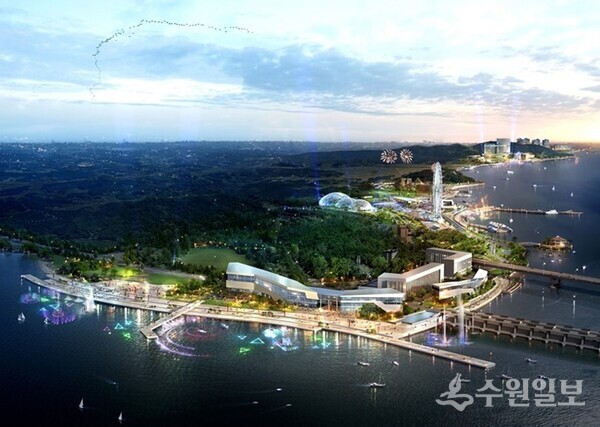
[News S=Kim Jong-sik Senior Correspondent] There are calls for Pyeongtaek, a city that borders the West Sea but finds it difficult to actually access the sea, to seek a new tourism strategy.
Pyeongtaek's interface with the West Sea is located at two major points: the Pyeongtaek Lake Tourism Complex and the Pyeongtaek-Dangjin Port area.
However, both areas face structural limitations that make it difficult for residents and tourists to encounter the sea.
The Pyeongtaek Lake Tourism Complex, designated as a tourist destination in 1977, once served as a representative waterfront tourism site for the Seoul metropolitan area. However, after the West Coast Expressway opened in 2000, accessibility dropped significantly and visitor numbers plummeted.
With private development also delayed, the area has lost its vitality to the point where it is described as "dreary."
The Pyeongtaek-Dangjin Port is designated as a Grade 1 national security port facility, and with the Navy's Second Fleet Command military facilities positioned nearby, general public access to the coastline is virtually impossible.
To address these structural limitations, the Ministry of Maritime Affairs and Fisheries and Gyeonggi Province are pursuing a project to concentrate water-friendly, cultural, and tourism functions along the drainage channel section stretching from the Pyeongtaek-Dangjin Port passenger terminal to the Asan Embankment.
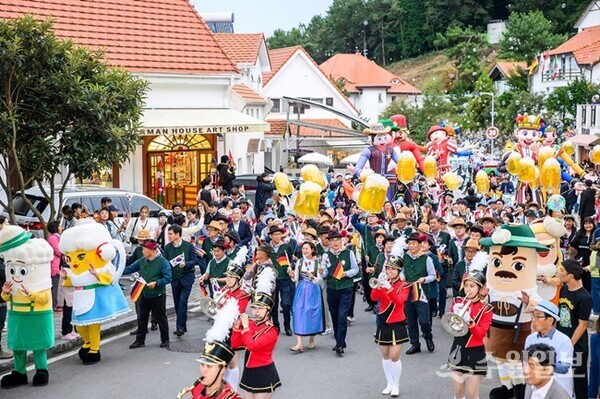
Pyeongtaek City is also planning to develop water sports centers, seawater hot springs and spa facilities, and artificial beaches at the Pyeongtaek Lake Tourism Complex.
However, development centered on single facilities has shown many failure cases in other regions. Experts point out that to fundamentally transform Pyeongtaek tourism, a "comprehensive content strategy responsive to long-term tourism trends" is necessary.
There are two key alternatives. First, relocating the security park located within the Navy Second Fleet Command headquarters to a waterfront park area near Pyeongtaek Lake, combining marine tourism with security education functions. Second, promoting the creation of a "U.S. military village" in the Pyeongtaek Lake Tourism Complex that surpasses Namhae's German Village.
When the two projects are combined, Pyeongtaek could be reorganized into the Seoul metropolitan area's most distinctive "marine-cultural-security integrated tourism zone," according to assessments.
◇Creating a "U.S. Military Village" Based on Pyeongtaek's Unique Characteristics
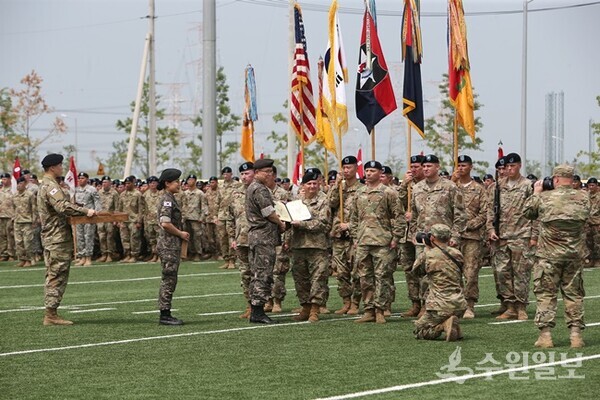
Pyeongtaek is the only city in the nation where "U.S. military culture tourism" is feasible.
Following the National Assembly's ratification of the relocation of USFK bases in 2004, Camp Humphreys, a U.S. Army base, underwent major expansion in Daechuri, Paengseong-eup, and units subordinate to the U.S. 2nd Infantry Division previously stationed north of the Han River were relocated in succession, completing the world's largest overseas U.S. military base. An air force base is located in the Songtan area.
Currently, approximately 30,000 U.S. citizens, including U.S. military personnel, families, and civilian employees, are known to reside in Pyeongtaek.
Excluding the U.S. mainland, this represents a larger scale than any other city in the world, essentially constituting the "world's largest American community."
This unique characteristic is a powerful tourism resource that other regions cannot replicate.
Despite poor accessibility, Namhae's German Village has become known on SNS and YouTube as a "value-for-money overseas travel destination," attracting over 50,000 visitors during beer festivals. The Pyeongtaek Lake Tourism Complex can be designed with complete separation between tourism and residential areas, and with overwhelmingly superior accessibility to the Seoul metropolitan area, it can create a far more stable and highly expandable themed tourism destination than Namhae.
In particular, Pyeongtaek possesses an identity that other regions cannot imitate—"authentic living American culture"—as actual U.S. military culture, food, and lifestyle exist in daily life.
Furthermore, as the Pyeongtaek-Dangjin Port waterfront park development project progresses, marine leisure, port views, waterside walks, and cultural experiences can naturally connect along a single pathway, which is a major advantage.
◇Maximizing Synergy Through Relocation of Navy Second Fleet Security Park (Cheonan Ilbo and Chamsuri Vessels) Outside Military Facilities
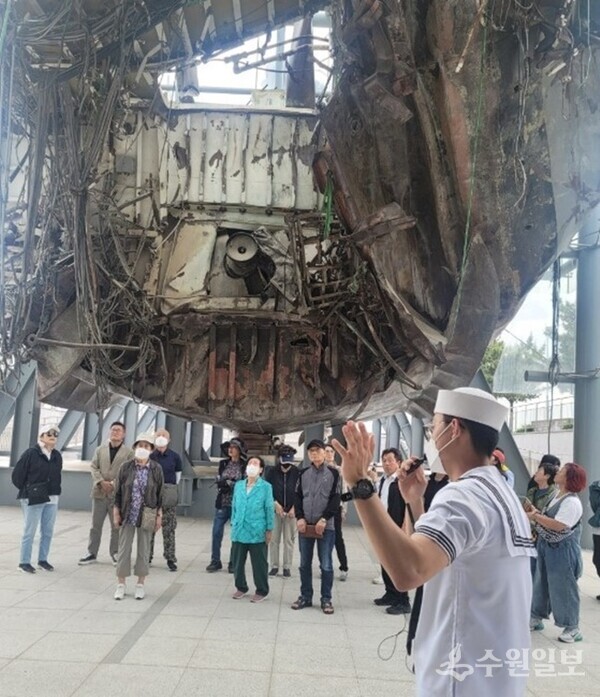
The security park within the Navy Second Fleet Command headquarters, located right next to the Pyeongtaek-Dangjin Port, displays the Chamsuri vessel No. 357, which sank during the Battle of Yeonpyeong, and the Cheonan Ilbo, a corvette that sank after a torpedo attack near Baengnyeong Island.
Despite strict entry procedures required due to facility security, including identity verification and dedicated bus transfers, the security park surpassed 1 million accumulated visitors within years of opening, demonstrating high public interest.
However, its location within the military facility has consistently raised issues regarding limited visitor capacity and poor accessibility.
Pyeongtaek City previously requested that the security park be relocated outside the facility to the Pyeongtaek Lake and Pyeongtaek-Dangjin Port waterfront park development area, but the substantial relocation costs and facility construction issues have proven to be obstacles.
Nevertheless, experts emphasize that to maintain the Second Fleet's combat capabilities while accommodating civilian tourism demand, external relocation should be reconsidered in the long term.
An official from the Pyeongtaek-Dangjin Port Development Council stated, "If a U.S. military village and the security park for the Cheonan Ilbo and Chamsuri vessels are jointly developed on Pyeongtaek's West Coast, where U.S. military forces are concentrated, we can expect to form a representative tourism destination for the Seoul metropolitan area and achieve a triple effect including strengthening the Second Fleet's combat posture and promoting development of Pyeongtaek-Dangjin Port," adding that "this is the time to develop a long-term tourism strategy looking ahead 50 to 100 years."
◇Will Pyeongtaek's West Coast Leap Forward as a "Marine-Cultural-Security" Integrated Tourism Destination?
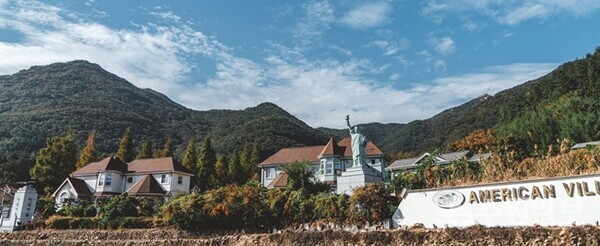
Pyeongtaek borders the West Sea, yet has long been perceived as a "city that does not touch the sea," failing to leverage its geographic advantages.
However, if Pyeongtaek Lake Tourism Complex improvements, drainage channel waterfront park development, U.S. military village creation discussions, and security park external relocation reviews proceed simultaneously, Pyeongtaek has significant potential to emerge as the most distinctive integrated tourism city in the Seoul metropolitan area.
It remains to be seen whether Pyeongtaek's new marine tourism strategy will serve as a key momentum for establishing a "100-year city brand" that departs from traditional tourism.