Interview Former Guri Mayor Park Young-soon Declares Candidacy for 9th Civilian-Elected Mayor's Term
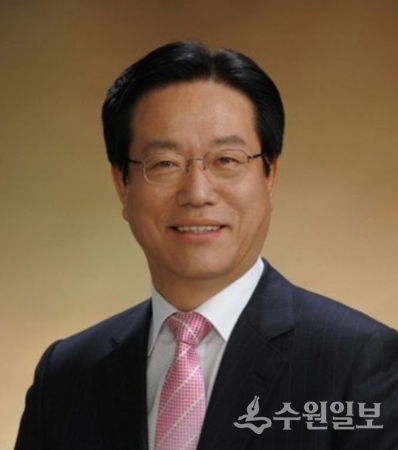
[News S=Reporter Eom In-yong] Former Guri Mayor Park Young-soon announced pledges to greet the Year of the Fire Horse in 2026 and declared his intent to run for the 9th civilian-elected mayor position to be held in June.
Park characterized current municipal administration as marked by 'trial and error' and 'total catastrophe,' and expressed his determination for a 'comprehensive transformation of Guri City' to reclaim a lost decade.
At the outset of his second round of pledge announcements, Park criticized major policy failures in Guri City, including the failure of GTX-B to stop at Galmaeri Station and the failed preliminary feasibility assessment for the Sanodong logistics complex.
Park stated that despite GTX-B's Galmaeri Station stop being a promise from the city mayor, National Assembly members, and the president, the notification of rejection from the Ministry of Land, Infrastructure and Transport merely demonstrates the incompetence of the mayor and National Assembly members, and called for them to apologize immediately and present responsible solutions.
Particularly regarding the Sanodong logistics complex project, he said, "The very idea of building a large-scale logistics complex near Dongguryeong, a UNESCO World Heritage site, is nonsensical, and this collapse is a disaster waiting to happen," and criticized it as "representative of wasteful administration," noting that the relocation of Guri Agricultural and Aquatic Products Wholesale Market has also fallen through due to such policy misjudgments.
Park defined the past decade as a period of 'speculative administration by inexperienced novice mayors,' stating that while successive mayors reversed core policies of former Mayor Park Young-soon under the pretext of political disputes, Guri City has plummeted to become the number-one bedroom city in the lower ranks of Gyeonggi Province's GRDP (Gross Regional Domestic Product), and as a result, the regional economy of Guri has completely collapsed. He emphasized, "Only Park Young-soon can resurrect Guri City through seasoned experience, verified expertise, and strong driving force."
The following is a question-and-answer session.
▲Regarding your '7 Major Self-Sufficient City Pledges' for Guri's development, what are your plans for Toepyeong 2 District and Sanodong development, which are pressing local issues?
- The Toepyeong 2 District is envisioned as a plan to designate an advanced urban industrial complex of over 100,000 pyeong through attracting K-content Korean Wave Hub and MICE industries, attracting K-pop arenas, K-content and hotels, convention centers, and creating tens of thousands of jobs.
District designation was completed in December of last year, and district planning is scheduled to be established this year. For our city's aspiration of a self-sufficient city to be realized, the designation of an 'advanced urban industrial complex' is absolutely necessary when establishing the district plan. This is because attracting businesses requires an 'advanced urban industrial complex' where land prices are supplied at development costs (or below cost).
Therefore, we will designate an advanced urban industrial complex in Toepyeong 2 District (over 100,000 pyeong) and attract MICE industries such as K-pop performance venues (arenas), K-content industries, hotels, and convention centers, thereby securing tax revenue for Guri City and providing job opportunities for tens of thousands of Guri citizens.
Additionally, we will create an 'East Han River Cultural Industry Belt' connecting Guri City with five cities below Paldang Dam (Namyangju, Hanam, Gangdong, Gwangjin, Songpa), and propose to relevant local governments and the central government to enable it to serve as a pillar of Korea's economy alongside the semiconductor national industrial complexes in Yongin and Pyeongtaek.
We absolutely pledge to prevent the unfortunate situation where Toepyeong Field, the last land of hope for Guri City, ends up becoming another bedroom city (new town) with large-scale apartment complexes and knowledge industry centers.
Furthermore, for independent development of Sanodong and relocation housing complex creation, we will change the plan from a logistics complex to a public housing district through consultation with LH, secure an independently developed area for Guri City, and create large-scale relocation residential complexes for residents of the old downtown redevelopment areas.
▲Do you have plans to revitalize Galmaeri New Town and the Guri Agricultural and Aquatic Products Wholesale Market?
- We plan to significantly expand Galmaeri New Town infrastructure. Through creative financing such as selling city-owned land, we will realize GTX-B's Galmaeri Station stop, create a 'renowned academy district' through establishing one specialized high school each for middle and high schools and providing 50% rental discount benefits.
We will also attract a 'complex shopping mall' to the Guri Agricultural and Aquatic Products Wholesale Market site, modernize and underground the wholesale market, and transform it into the largest commercial area in the northeastern Seoul metropolitan region by attracting a complex shopping mall and mixed-use residential-commercial complex on the above-ground area.
More specifically, we will modernize the Guri Agricultural and Aquatic Products Wholesale Market facilities and place them underground, and on the 70,000 pyeong above-ground site (wholesale market 58,000 pyeong + distribution comprehensive market 12,000 pyeong), we will attract the largest complex shopping mall in the metropolitan region, larger than Jamsil Lotte World (65,200 pyeong) or Hanam Starfield (35,700 pyeong).
We will connect underground to Donggur-yeong Station on Subway Line 8 (with future Line 6 transfer) and, on the distribution comprehensive market site, a general commercial district, will enhance profitability through mixed-use residential-commercial development utilizing 1,200% floor area ratio.
Through this project, we will dramatically increase Guri City's financial independence through substantial tax revenue and greatly contribute to improving citizens' welfare.
▲What is your three-stage strategy for Guri's incorporation into Seoul?
- I have created a realistic roadmap that promotes legislation after establishing a self-sufficient city foundation and persuading Gyeonggi Province and Seoul, rather than unconditional slogans.
Currently, 'Guri's incorporation into Seoul' is realistically impossible. The reason is that for 'Seoul incorporation,' the Ministry of the Interior and Safety must propose a special law, but this requires consent (approval) from Gyeonggi Province (provincial assembly) and Seoul (city assembly), and while this will be determined by the results of this local election, I understand that Gyeonggi Province currently holds a negative stance. Furthermore, even if the government's bill is submitted to the National Assembly, given the current political landscape where the Democratic Party opposes it, passage through the National Assembly cannot be expected.
Therefore, we will pursue the following three-stage 'Seoul incorporation' strategy.
First, concrete policy establishment for realizing Guri as a self-sufficient city must be preceded, and we must obtain government approval. After obtaining government approval for designating the 'Guri Advanced Urban Industrial Complex' in the Toepyeong 2 public housing district and the K-content Korean Wave Hub city basic plan, we will move to the second stage: persuade Gyeonggi Province and Seoul after the local election, obtain consent, proceed with legislation, submit to the National Assembly, and secure passage.
▲What about significantly expanding the railway network?
- We will complete a dense railway network including GTX-B (Galmaeri), GTX-D (Toepyeong), Line 6 extension (Donggur-yeong), Byeolnaei Line new stations (Sustaek and Toepyeong), and Gyeongui-Jung-ang Line Inchang Station construction.
To break it down, this includes GTX-B line Galmaeri Station stop, GTX-D line connection to Toepyeong K-content Korean Wave Hub city, Subway Line 6 connection to Donggur-yeong Station, two new stations (Sustaek Station for Sustaek 2 Redevelopment District and Toepyeong Station for Toepyeong Korean Wave Hub city) on the Byeolnaei Line, Inchang Station construction on the Gyeongui-Jung-ang Line (behind Inchang Elementary School), and Myeonmok Line connection to Galmaeri Station and Sanodong.
Additionally, to elevate educational, cultural, and welfare infrastructure, we have already devised 18 detailed tasks to enhance citizens' quality of life, including attracting private schools and specialized vocational schools, establishing a second Arts Center and second Veterans/Senior Citizens Hall, reconstructing the Guri City Sports Complex, hosting national e-sports competitions annually, and creating a par-golf course on the Han River floodplain.
▲What would you like to say to citizens?
Ten years have passed since my mid-term resignation as 6th civilian-elected mayor, but I could not bear to merely watch a stalled Guri, so I have decided to take the mound in the 9th inning with the resolve of a relief pitcher. This election is a watershed determining whether Guri will eternally plummet to become a 'bedroom city' in the metropolitan region or soar as a self-sufficient city," he stated, adding, "Park Young-soon, who has proven through action, will burn my last embers and surely achieve the 'Miracle on Guri's Han River.'"