Gyeonggi Province Accepts Recommendations for Private Gardens Until September 4
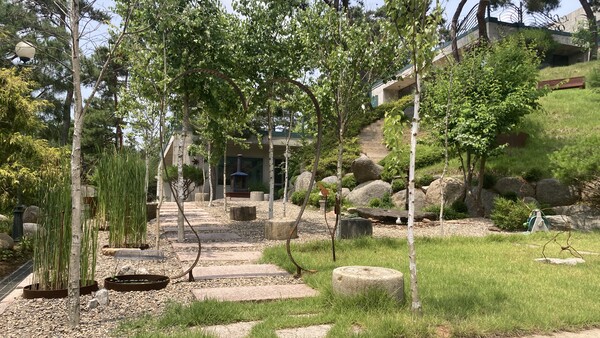
Gyeonggi Province is accepting recommendations for private garden candidate sites through cities and counties until September 4 to increase the number of beautiful and distinctive gardens.
Private gardens are gardens created and operated by corporations, organizations, or individuals. To register, green space must account for at least 40% of the total garden area. Gyeonggi Province recommends a green space area of 330 square meters or more. Amenities such as parking lots and restrooms for visitors must also be provided.
Candidate sites recommended by cities and counties undergo preliminary consulting by the Korea National Park Service Arboretum and Garden Management Corporation, followed by review of registration standards and relevant laws. After on-site inspections and expert assessments in the garden field to examine garden creation and management conditions, a final registration decision is made.
Separately, Gyeonggi Province plans to conduct on-site inspections in September on two newly registered applicants: 'Seokjeong Garden' and 'Souplbaba.' Experts will visit the sites to assess garden creation and management conditions and compliance with registration standards. If both are registered, the number of private gardens in the province will increase from the current six to eight.
Currently, six private gardens are registered in Gyeonggi Province: two in Gapyeong County, two in Yeoju City, one in Yangpyeong County, and one in Hwaseong City. Among these, 'Tasha's Garden 251' in Gapyeong County was selected for the 2024 'Top 30 Private Gardens of Korea,' and 'Our Dream' in Yeoju City won an award at the 2021 'Beautiful Gardens of Korea Contest.'
Lee Tae-seon, head of the Garden Industry Division at Gyeonggi Province, said, "We will actively discover beautiful and distinctive gardens hidden throughout the province so that more residents can enjoy gardens in nearby areas," and "We will continue to support private gardens in establishing themselves as new garden culture spaces in their regions."