Lee Byung-hee's 100th Birth Anniversary ④ 'Team Lee Byung-hee'...In the End, It's About People
Editor's Note
2026 marks the 100th anniversary of the birth of Baekwoong Lee Byung-hee. As a seven-term National Assemblyman from Suwon, he left significant marks on Suwon's growth, including the relocation of the Gyeonggi Provincial Government, the restoration of Suwon Hwaseong, and business recruitment. Behind it all was his dedication to connecting the central government, businesses, the civil service, and the region. News S reflects on the time Baekwoong Lee Byung-hee and Suwon spent together as we commemorate his 100th birth anniversary.
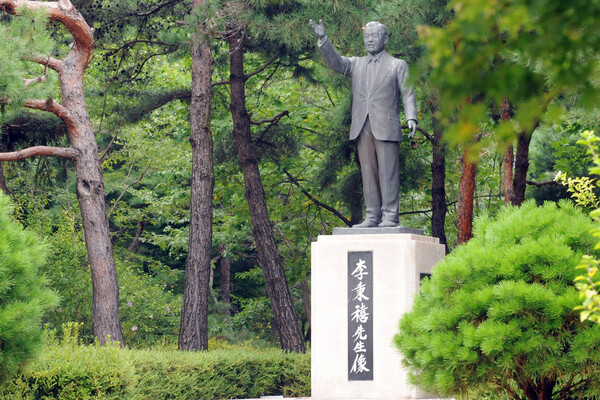
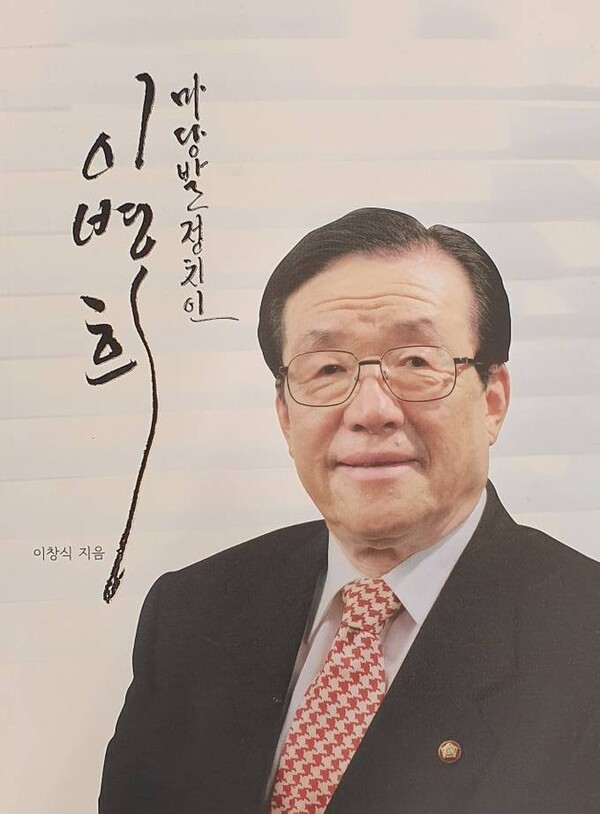
Lee Byung-hee had one nickname that followed him throughout his life.
'Well-connected politician'.
This was not merely due to his political career as a seven-term National Assemblyman, minister, and major party official in the ruling party. He was known for crossing boundaries—from the political sphere to bureaucrats, entrepreneurs, sports circles, and local communities—constantly meeting people and maintaining those relationships over time.
One of Lee Byung-hee's greatest political assets was people. At the center of this network was Kim Jong-pil.
The two were classmates at the Korean Military Academy, Class of 1948. They participated together in the May 16 coup and continued on the same political path afterward. Lee Byung-hee participated in the founding of the Democratic Republican Party and later joined Kim Jong-pil when he established the New Democratic Republican Party in 1987. They were together in the Three-Party Merger of 1990, and when Kim Jong-pil left the Democratic Liberal Party to establish the United Liberal Democrats in 1995, Lee Byung-hee joined him again. The Encyclopedia of Korean National Culture records that the two had a deep friendship and traveled the same political path.
It was a relationship that lasted over 30 years.
But Lee Byung-hee's connections did not stop at politics.
His relationship with Lee Byung-chul, founder of Samsung, is a prime example.
Lee Byung-hee and Lee Byung-chul's connection traces back to after May 16. At that time, serving as the head of the Seoul branch of the Central Intelligence Agency, Lee Byung-hee reportedly came to know Lee Byung-chul while managing entrepreneurs designated as having illicitly accumulated wealth.
Lee Byung-hee treated entrepreneurs humanely, and through this process, a relationship with Lee Byung-chul was formed. When Samsung later sought a site for an electronics factory, Lee Byung-hee recommended Suwon to Lee Byung-chul, and the relationship between the two led to Samsung Electronics locating in Suwon.
Having connections and turning them into concrete results for a region are two different matters.
The characteristic of Lee Byung-hee's politics was that he connected relationships between people with Suwon's pressing issues.
His relationship with Lee Byung-chul led to Samsung Electronics, and his relationships with central government figures including Kim Jong-pil became the political channel through which Suwon's major issues were resolved.
However, major projects could not be created by a politician alone.
Lee Byung-hee had practical administrators who turned ideas into concrete plans.
The restoration of Suwon Hwaseong is a prime example.
In the early 1970s, the government was focusing on restoring patriotic cultural heritage sites such as Admiral Yi Sun-sin's relics, Jinju Castle, and Haengju Fortress. To include Suwon Hwaseong in the national restoration project, there was a need for justification and a plan to move the government.
Lee Byung-hee tasked administrative officer Im Su-bok, who worked at the Office of the First Vice Minister, with researching Suwon Hwaseong and devising ways to include it in the national project.
Im Su-bok did not work alone. With the help of historians and local historians, he conducted field surveys and gathered materials. Over approximately two months, what emerged was the "Hwasan Comprehensive Restoration Plan" encompassing Suwon Hwaseong, Yung and Gyeongneung Royal Tombs, Yongju Temple, and more.
The politician's vision was transformed into an administrator's plan.
The plan document was then passed into the realm of politics.
In November 1973, Prime Minister Kim Jong-pil reviewed the plan and instructed the Ministry of Culture and Information to establish a comprehensive plan. That same December, the plan received the approval of President Park Chung-hee. Subsequently, the Cultural Properties Administration, the Office of the First Vice Minister, Gyeonggi Province, and Suwon City collaborated, and the Suwon Hwaseong restoration project was fully launched.
This process illustrates how Lee Byung-hee promoted his work.
A politician set the direction, experts and civil servants created the plan, the decision-makers of the central government were persuaded, and then the government and local governments implemented it.
Lee Byung-hee was in front of the results, but behind them were numerous people.
It was the same with business recruitment.
Records show that when searching for a Samsung Electronics factory site, Lee Byung-hee toured the sites directly with Lee Byung-chul. When the Cheoncheon-dong area was initially considered but judged unsuitable as a factory site, they again toured the outskirts of Suwon to find an alternative, and eventually the Maetan-dong area became the new candidate site.
One person did not have all the answers.
The entrepreneur made investment decisions, civil servants handled administrative procedures, the central government determined policy and budget, and local figures moved on the ground.
Lee Byung-hee moved between them.
Sometimes, relationships with political rivals also crossed boundaries.
In the 7th National Assembly elections in 1967, Lee Byung-hee faced Kim Doo-han, a New Democratic Party candidate in Suwon. He waged an intense campaign against Kim Doo-han, who had gained fame as the "General's son," and won a second term.
However, the relationship between the two did not end with the election.
According to local records, four years later in the 8th National Assembly elections of 1971, Kim Doo-han appeared as a supporting speaker at Lee Byung-hee's campaign rally in Suwon.
They were opponents in one election but on the same side in the next.
This anecdote illustrates one aspect of politics at the time—political competition was not carried over to the point of severing human relationships—and also demonstrates how broadly Lee Byung-hee engaged with people.
His sphere of activity extended beyond politics and economics into the sports world.
After taking over as chairman of the Korea Basketball Association in 1964, he was reelected until 1980. He also served as president of the Asian Basketball Confederation and vice president of the International Basketball Federation. He also served as vice president of the Korea Sports Council and standing member of the Korean Olympic Committee. For a politician, it was exceptionally rare to be active in the domestic and international sports community for such a long period.
He stood with Kim Jong-pil in central politics, developed relationships with entrepreneur Lee Byung-chul, and when restoring Suwon Hwaseong, practical administrators like Im Su-bok were mobilized. Around Lee Byung-hee were people from different fields—entrepreneurs, bureaucrats, scholars, local figures, and sports people.
Therefore, if we interpret the nickname "well-connected" merely as meaning he had wide connections, we see only one side of Lee Byung-hee's politics.
For him, relationships were a means to accomplish work.
When Suwon needed something, he went up to the central government; when businesses needed help, he met with entrepreneurs. When ideas were needed, he sought experts and attached practical administrators to turn them into plans.
There were certainly temporal limitations to this method. Personal relationships with those at the core of power became an important channel for drawing regional resources. It is difficult to compare directly with today's politics, where policy decisions are centered on systems and procedures.
Nevertheless, there are points for 2026's local politics to reflect upon.
Major regional problems cannot be solved by the strength of one politician alone. Results can only be achieved by moving the central government and local governments, businesses and experts, and civil society, and by binding different interests toward one goal.
What Lee Byung-hee did half a century ago was ultimately this process.
He was not a politician who did everything alone. Rather, because he did not do it alone, he was able to accomplish much. Having knowledge of people was not the source of power; the power lay in moving those people for the benefit of the region.
Lee Byung-hee had people, and among those people was Suwon.
전시언 기자 yourside@news-s.kr