Kim Ju-song's Japan Field Study Following the Path of the Joseon Envoy Mission (2)
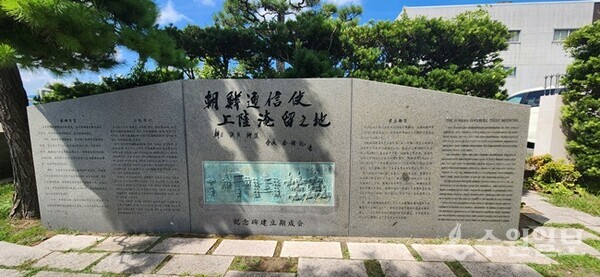
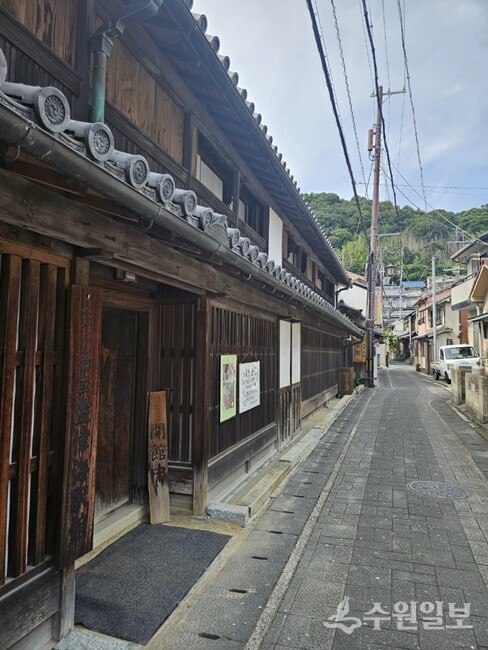
On the afternoon of the second day of the field study following the path of the Joseon Envoy Mission, we visited the Murotsu Maritime Museum in Tatsuno City, near Himeji. This was where the envoy delegation anchored and stayed before heading to the Kobe area.
As a result, the place we visited this time felt more deeply connected to the traces of the envoy mission than anywhere else.
At the Murotsu Maritime Museum, replicas of food that was supplied to the Joseon Envoy Mission during the Edo Shogunate period were on display, allowing us to learn what meals were provided to the delegation upon arrival in this region.
Additionally, there were folding screens, replicas housed in other museums, that offered glimpses of the Joseon Envoy Mission procession, allowing us to observe the grand and dignified processions of that era.
Beyond this, lodging records remained documenting the Joseon Envoy Mission dispatched to Japan in 1748 staying here, providing vivid insights into the conditions of that time.
Apart from the Joseon Envoy Mission, the Murotsu region was also a route taken by Japanese feudal lords who engaged in Sankin-kotai (the system implemented by the Edo Shogunate during Japan's Edo period to control regional powers), traveling through the Seto Inland Sea to Edo. Many documents remained recording stays of feudal lords from places like Shikoku at the Murotsu Maritime Museum for their Sankin-kotai duties.
The Murotsu port served as a stopover providing comfortable rest for all who traveled the Seto Inland Sea, including the Joseon Envoy Mission.
Although the maritime museum was built in the 19th century, the fact that it was constructed as a two-story building revealed that it had flourished significantly as an intermediate stopover.
This field study journey traced the envoy mission's route to Osaka in reverse. On the first day, we could view the envoy mission route from a high mountain overlooking the beach, the final anchorage and arrival point. The next day, we examined Murotsu on the way to Osaka, and on the third day, we finally observed Shimonoseki, the gateway to the Seto Inland Sea, which the envoy delegation departing from Busan passed through via Tsushima Island, Iki Island, and Ainoshima.
There were two locations in Shimonoseki related to the Joseon Envoy Mission. One was a monument erected in 2001 at the landing site, and the other was Akama Shrine, built on the site of Amitaji Temple where they stayed. The envoy delegation departing from Busan anchored at Shimonoseki before entering the Seto Inland Sea, passing through Tsushima Island, Iki Island, and Ainoshima. On this occasion, they landed via a specially constructed pier in front of Amitaji Temple.
Even today, examining these two locations reveals a stairway leading to the sea directly across from the shrine, and beside it stands the Monument to the Landing and Sojourn of the Joseon Envoy Mission, erected to commemorate their arrival here.
Shimonoseki was originally called Akamageseki. The name changed to its current form in 1902, and the old name is preserved in Akama Shrine, built on the site of Amitaji Temple where the Joseon Envoy Mission stayed.
Additionally, the Busan-Shimonoseki shipping route was established from 1905, was interrupted after liberation in 1945, and resumed in 1970. The Shimonoseki region served as a link between Japan and Korea not only during the Joseon era but continues to do so today.
Furthermore, this region is where many Heikegani crabs are caught. A legend related to the Battle of Dan-no-ura, which took place in the Kanmon Strait between Shimonoseki and Moji in Kitakyushu during the Heian period, is transmitted in connection with these crabs.
Specifically, the legend states that people who died in this naval battle became crabs with human-like faces. The shrine where the envoy mission stayed also contains accounts related to this war, with one tradition holding that Taira no Tokiko and Emperor Antoku jumped into the sea together following their defeat.
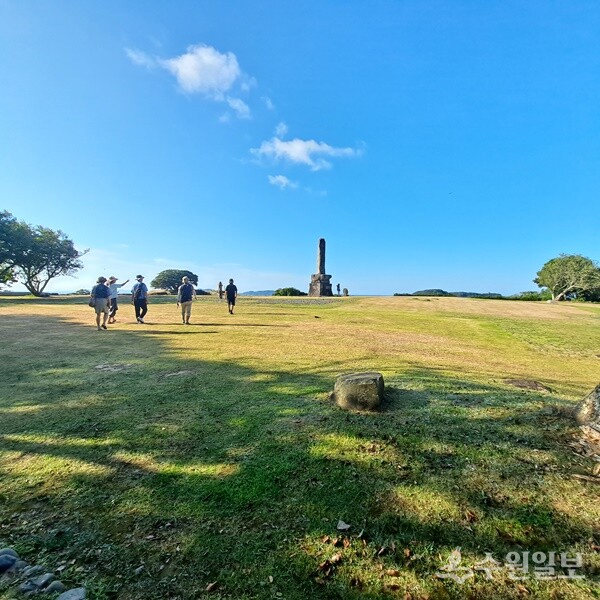
On the afternoon of the third day, we headed to the Nagoya Castle Museum and Nagoya Castle in Saga Prefecture.
Traffic became severely congested immediately after crossing the bridge over the Kanmon Strait, and upon arrival, the museum was near closing time.
Rushing through, we observed that the Nagoya Castle Museum displayed relics excavated from the surrounding area, explaining from which locations on the Korean peninsula they were transmitted and in which era they arrived.
Ultimately, the relics demonstrated very close exchanges between the Korean peninsula and Japan from well before the Three Kingdoms period. They were organized in a format primarily explaining culture transmitted from the Korean peninsula, including official Joseon documents and relics related to the dispatch of the Joseon Envoy Mission.
Two Nagoyas exist in Japan: one is the major city of Nagoya (名古屋) in Aichi Prefecture, and the other is Nagoya (名護屋) in Karatsu City, Saga Prefecture.
We visited the latter Nagoya, which was established as a military base by Toyotomi Hideyoshi for invasion of Joseon during the Imjin War. Centered on Nagoya Castle under Toyotomi Hideyoshi's command, daimyo from various regions nationwide were stationed within a 3-kilometer radius.
Compared to other Japanese castles, Nagoya Castle can be considered a modest-sized fortress; however, the location of the castle afforded an open vista allowing observation not only of all the surrounding stationed forces but also the sea heading toward the Korean peninsula.
This demonstrates how thoroughly Japan prepared for the invasion of Joseon at that time.
The final destination of the field study was Kushida Shrine in Fukuoka. In the alley leading to Kushida Shrine stood a stone torii gate erected in Showa 9 (1934).
The torii gate bore the name of Hakata (博多産子中), the person who commissioned this structure and dedicated it to Hakata Shrine. At this shrine were enshrined Amaterasu, the sun goddess, and Susanoo, the god of the sea.
These principal deities were enshrined centrally, and surrounding them were many smaller shrines within the grounds enshrining various other deities worshipped in the region.
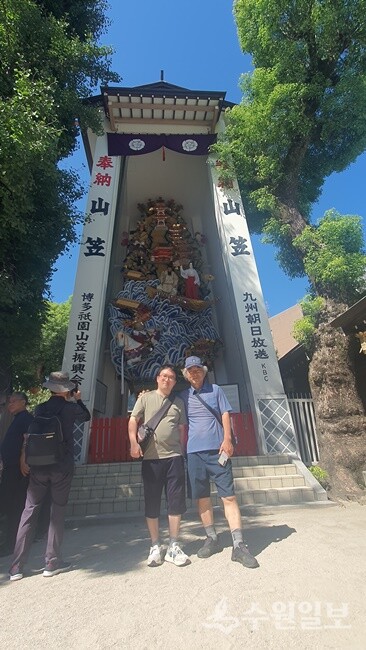
The Hakata Gion Festival is held in July in the Hakata area where Kushida Shrine stands, featuring a procession carrying elaborately crafted portable shrines. Each town in the Hakata area makes one portable shrine to be displayed at the regional event.
Within the grounds of Kushida Shrine was displayed this year's winning portable shrine. Its height was considerable, adorned with various decorations including wave designs, and it was evident that carrying this shrine must have been extremely challenging for the bearers.
According to our guide, the people carrying this shrine prepared their minds and bodies as if undergoing ritual purification and remained dedicated to practice until the event commenced. It was evident that the festival was conducted with sincere reverence.
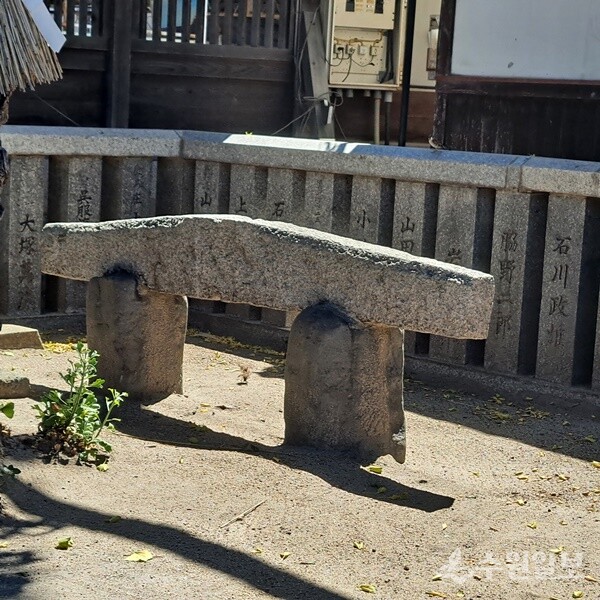
Another notable feature at Kushida Shrine is two stones presumed to be anchor stones abandoned by the Yuan-Mongol allied forces, displayed beneath an ancient ginkgo tree estimated to be over one thousand years old and used as supporting stones.
The relics presumed to be anchor stones reflect the urgency Japan faced during invasions by the Yuan-Mongol allied forces during the Kamakura Shogunate and are believed to have been moved to Kushida Shrine to commemorate their repulsion through divine protection against a sudden storm.
Although this field study was conducted over a short period, by confirming the traces of the Yuan-Mongol allied forces, the relics related to the Imjin War, and subsequently the route of the Joseon Envoy Mission, we were able to verify the history that unfolded between Korea and Japan at that time.