Suwon Through the Microscope(131) Mayor Lee Sang-ryong Threaded the First Button in Building Suwon Yeonewhajang
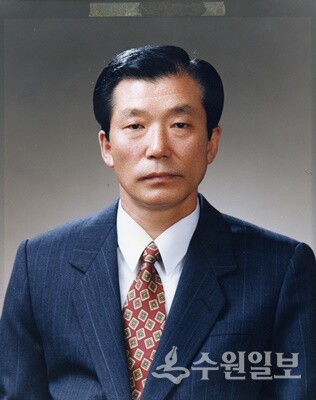
The first person to advocate for the necessity of building Suwon Yeonewhajang (crematorium) and select its site was Lee Sang-ryong, the 20th appointed mayor of Suwon, and the person who actively pursued this project was Shim Jae-deok, mayor of the first popularly elected term.
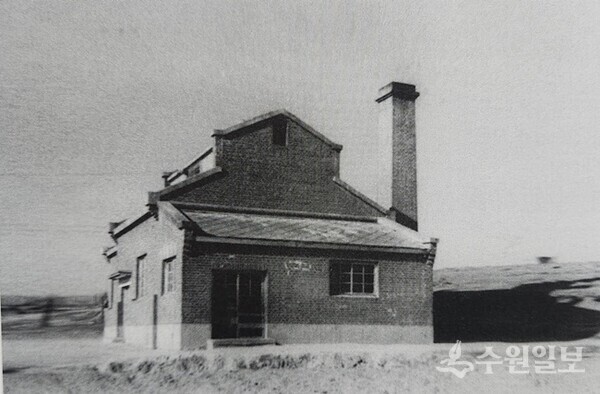
In the late 1910s, Suwon's first crematorium was built and began operating at 825 Saeyu-dong. The Japanese colonial administration recommended cremation to the Koreans, but it did not take root as a common funeral practice. Cremations of those who died from infectious diseases and poor people gradually increased.
In 1920, an article about Suwon was published in the Dong-A Ilbo. It said, 'the distance between the crematorium and residential areas is so close that it is difficult to endure the smell of burning people day after day.' Based on the article, the cremation technology of the time was apparently unable to prevent smoke and odors.
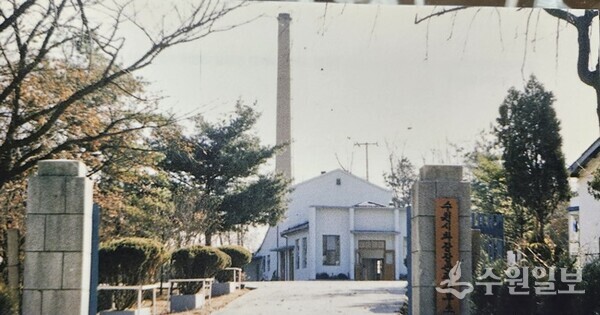
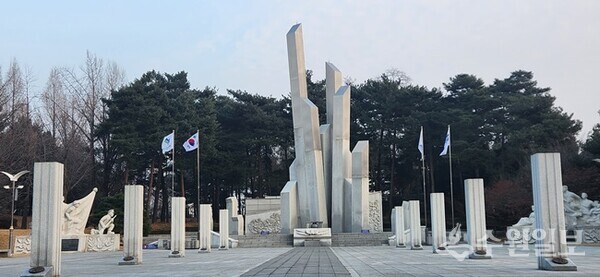
As cremations increased due to the Korean War in 1950, issues of smoke and odors as well as hygiene problems could not be overlooked, causing inconvenience to residents' lives. Suwon City promoted the relocation project of the crematorium and on August 11, 1962, equipped the Ingyeong-dong facility with three cremation furnaces (processing nine bodies per day).
At that time, Suwon crematorium was the only one in Gyeonggi Province except for Seongnam crematorium, so it was used throughout Gyeonggi Province as well as the Chungcheong and Gangwon regions.
With the implementation of the Maetan residential development project in the 1980s, requests for relocation of the crematorium began when Maetan Apartments, Kwonseon Apartments, and Ingyeong Apartments complexes were built.
In 1987, with the relocation of Suwon City Hall to East Suwon and the construction of the Gyeonggi Culture and Arts Center, the demand for crematorium relocation intensified further.
The crematorium relocation began in earnest in 1990 when 1,200 units of Imkwang Apartments were built in the Maetan residential development district.
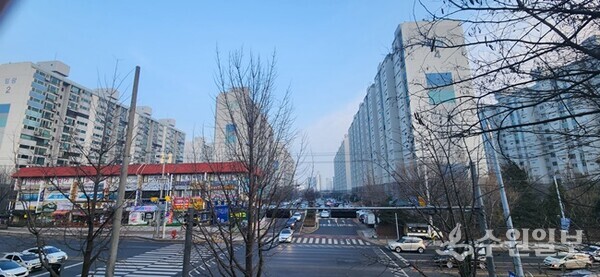
Residents of Imkwang Apartments moved in with a vague expectation that the crematorium would be relocated elsewhere once the apartment complex was completed. However, after moving in, they discovered that the harmful effects of Suwon crematorium, located just 100 meters away, were severe.
Even on weekdays, cremations took place several times, and dust would fly into the apartments and settle on laundry, while smoke would accumulate on cars. On cloudy days, an acrid smell permeated the area, making daily life difficult. Imkwang Apartments residents filed complaints requesting crematorium relocation over ten times, but when there was no response, hundreds of residents visited City Hall and held collective actions several times. As a former resident of Imkwang Apartments myself, I vividly remember those days.
Around that time, in 1987, Kwonseon-dong Church was established at 1015 Kwonseon-dong. Kwonseon-dong Church was a branch established by Maegyo-dong Church on a 950-pyeong lot in a prefabricated temporary structure. At that time, Father Francisco Kim Jung-won was assigned the task of properly constructing a church. Father Kim was concerned that if a new church were built in the commercial area in front of City Hall, the surrounding area would be densely packed with entertainment facilities, which would not only inconvenience religious life but also inconvenience surrounding shops.
Father Kim came to think that if a church were built on the Suwon crematorium site, which the city could not resolve, it would both present a proper church and solve Suwon's headache. After consulting with Bishop Kim Nam-soo, the Archbishop of the Catholic Diocese of Suwon, he received a positive response.
To implement this, the Catholic Diocese of Suwon met with Gyeonggi Province and Suwon City authorities, with Governor Lim Sa-bin, Mayor Yu Seok-bo, Bishop Kim Nam-soo, and Father Kim Jung-won in attendance. At this meeting, the Catholic Diocese of Suwon proposed relocating Suwon crematorium to the Catholic Diocese of Suwon's Memorial Park cemetery in Bogae-myeon, Anseong-gun, and exchanging 5,000 pyeong of the Ingyeong-dong crematorium site for the Kwonseon-dong Church site, and agreement was reached. It was decided that the Catholic Diocese of Suwon would oversee and implement this project.
The Catholic Diocese of Suwon submitted a relocation permit application for Suwon crematorium to Anseong-gun. However, the Anseong-gun County Governor at that time apparently felt burdened by attracting a nuisance facility like Suwon crematorium to Anseong and incited residents to protest against the relocation. As a result, the Suwon crematorium relocation project ultimately wasted five years of time and returned to square one. Afterwards, Kwonseon-dong Church secured a site of approximately 3,000 pyeong in the Kwonseon-dong 3-2 area and built a new church, which relocated in 1998.
In January 1994, when Lee Sang-ryong took office as the 20th Mayor of Suwon, he believed that the most urgent task facing Suwon was the relocation of Suwon crematorium and threw himself into the effort.
At that time, Mayor Lee Sang-ryong believed that when the popularly elected era began, elected mayors would find it difficult to promote nuisance facilities such as crematoria, sewage treatment plants, and garbage incinerators.
"If the appointed mayor does not take responsibility and finalize the relocation of Suwon crematorium that residents oppose, a popularly elected mayor may never be able to move it," he said. In July 1994, Mayor Lee Sang-ryong established a plan to promote the relocation of Suwon crematorium and reported it to the Suwon City Council. He reported that he would secure consultant fees for candidate site selection and select candidate sites by the end of 1995.
He then formed a task force team to handle the crematorium relocation work. The task force team leader was Kim Seok-man, Director of Health and Welfare, with Jo Pil-sang, Director of Social Affairs, as the responsible member, and the operational work was handled by Kang Myeong-seok, Chief of Public Hygiene, his successor Kim Jae-bok (former Director of Youngtong Health Center), and Lee Hang-woo, and urban planning was handled by Choi Ho-un (currently Chairman of the Hwaseong Study Group).
Over seven months, the task force selected about ten candidate sites and narrowed them down to three through careful review. ▷The first candidate site was approximately 48,700㎡ (14,731 pyeong) in Homae-sil-dong, Kwonseon-gu, ▷the second candidate site was approximately 128,151㎡ (38,765 pyeong) in Imok-dong, Jangan-gu, and ▷the third candidate site was approximately 57,694㎡ (17,452 pyeong) in Hadong, Paldal-gu.
Suwon City began reviewing the three compressed candidate sites. Subsequently, the Petition Examination Special Committee of the Suwon City Council's interim session selected the area around Hadong 20-beonji, Paldal-gu, as the Suwon crematorium site through a vote.
And on February 10, 1995, at the 132nd Suwon City Council general meeting, it was finally approved by receiving consent for public property acquisition approval.
During his short term in office (January 1994–April 1995), Mayor Lee Sang-ryong devoted himself wholeheartedly to promoting three nuisance facilities—crematorium, garbage incinerator, and sewage treatment plant expansion—and to building Suwon Open Air Music Hall.
As Suwon transitioned to the popularly elected era through the efforts of a conscientious administrator (牧民官) during the final period of appointed government, the city was able to skillfully handle three nuisance facilities without major conflict, becoming a city where citizens are happy.
I offer my thanks to the late Mayor Lee Sang-ryong.