Special Feature Enjoy Fresh Greenery at Hwaseong's Yungneung and Gyeongneung, UNESCO World Heritage Sites That Reveal the 'Secret Forest'
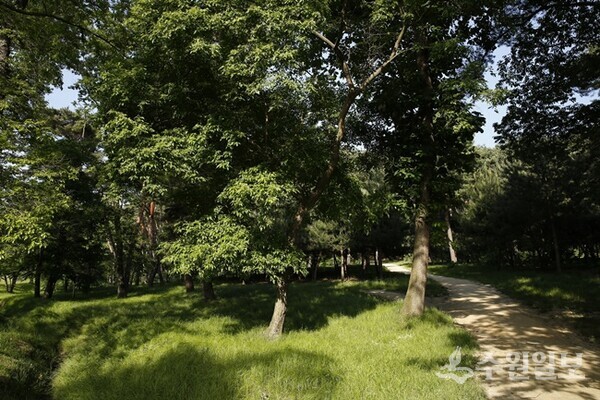
[News S=Reporter Jung Jun-sung] Hwaseong's Yungneung and Gyeongneung were designated as UNESCO World Heritage Sites in 2009. In June, as the fresh green of new foliage deepens, the forest trails here are particularly lush. Visitors can immerse themselves in phytoncides. Walking along these forest trails lined with towering pine and oak trees, one can encounter Yungneung and Gyeongneung, one of UNESCO's world heritage 'Joseon Royal Tombs,' and the natural monument cephalotaxus tree. The cephalotaxus reaches the largest size in Korea, offering visitors a sense of wonder. Hwaseong Special City has recommended Hwaseong's Yungneung and Gyeongneung as a destination this month for outings. Why not enjoy the fresh greenery at Hwaseong's UNESCO World Heritage Site Yungneung and Gyeongneung, which is temporarily open through the last weekend of June, the 30th?
◇ King Jeongjo's Longing for His Father Becomes a World Heritage
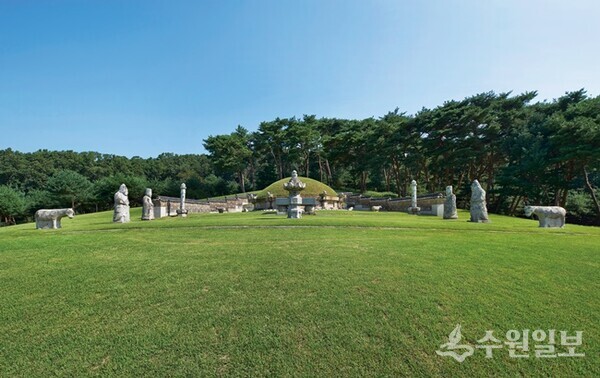
'Yungneung and Gyeongneung,' born from tears and longing for one's father.
Hwaseong's Yungneung and Gyeongneung, designated as historic sites, are representative legacies of Hwaseong Special City that contain the poignant history of the Joseon royal dynasty and the deep filial piety of King Jeongjo.
Located in Aennyeong-dong, Byeongjeong Ward, Hwaseong Special City, Yungneung and Gyeongneung, as royal tombs of the Joseon court, received global recognition for their value and were designated as a UNESCO World Heritage Site in 2009.
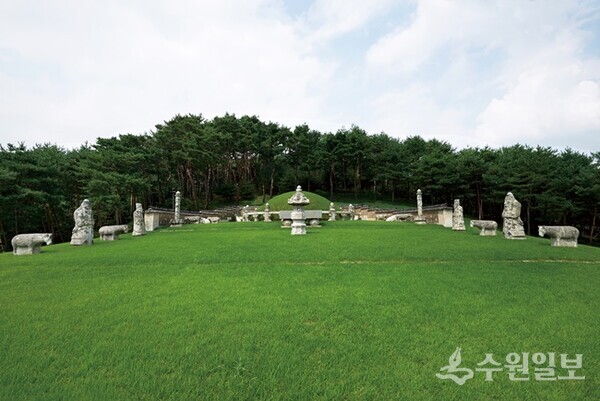
Yungneung and Gyeongneung consist of 'Yungneung,' which enshrines the posthumously honored Emperor Jangjo (Prince Sado) and Empress Heongyeong Hong, and 'Gyeongneung,' which enshrines King Jeongjo the 22nd of Joseon and Empress Hyo Kim.
In particular, Yungneung was relocated from Baebongsan Mountain in Yangju in 1789 to its current location in Aennyeong-dong and was developed as 'Hyeongyungwon.'
This is a space that embodies King Jeongjo's deep longing and affection for his father, and is a symbolic legacy that vividly conveys the Joseon royal court's philosophy of filial piety and historical significance to the present day.
◇ Hwaseong Reveals the Inner Beauty of Its Hidden 'Secret Forest Trail'
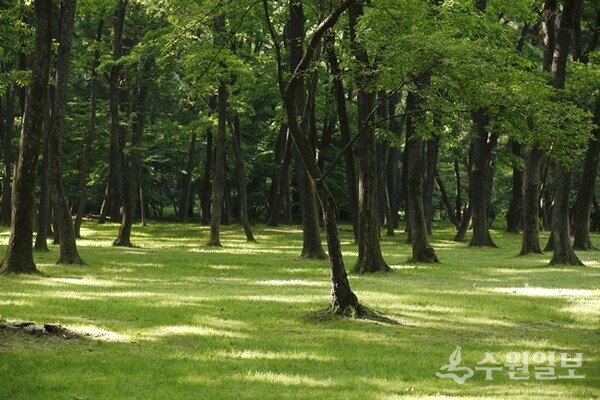
Hwaseong Special City is temporarily opening the 'Yungneung~Gyeongneung Forest Trail' through the 30th.
Thus, one can experience the Yungneung and Gyeongneung, which embodies such profound filial piety, up close by walking directly along the pine forest soil path.
This is because the 'Yungneung~Gyeongneung Forest Trail' at Hwaseong's Yungneung and Gyeongneung is temporarily opening to citizens through the 30th.
The 'Yungneung~Gyeongneung Forest Trail' is a soil path connecting Yungneung, where Prince Sado (the posthumously honored Emperor Jangjo) rests, and Gyeongneung, where Emperor Jeongjo rests.
Tall pine and oak trees cast deep shade, making the path fragrant with pine scent even in midsummer, perfect for walking.
Most of the tomb area is level, allowing anyone regardless of age or gender to stroll without burden, and stroller rental is also available, making it perfect for family visitors.
Beyond the ticket booth, the path divides into two routes.
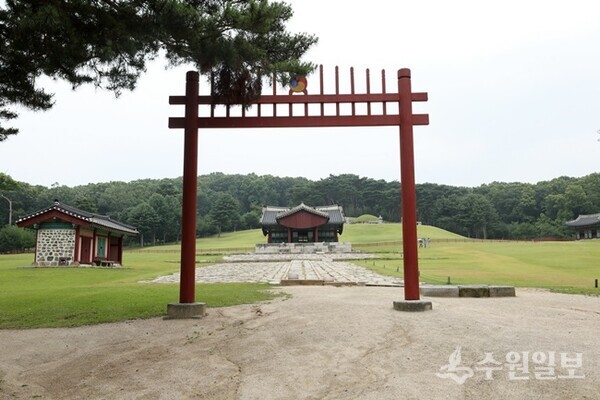
The right path leads to 'Yungneung,' the tomb of Prince Sado and Empress Heongyeong Hong, and the left path leads to 'Gyeongneung,' the tomb of King Jeongjo and Empress Hyo Kim.
One encounters the two tombs that embody King Jeongjo's deep longing for his father along a single path.
As one listens to the wind blowing through the pine forest and the sound of birds, a healing moment unfolds where complicated thoughts naturally clear from the mind.
This temporary opening is part of the 'World Heritage Joseon Royal Tombs Forest Trail Opening' event arranged by the National Heritage Service's Royal Tomb Heritage Division to coincide with the season of deepening fresh greenery.
One can simultaneously enjoy fresh, verdant foliage and deep pine scent.
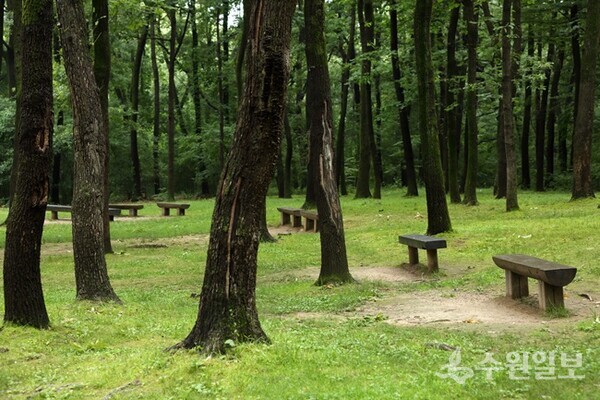
Family outings and citizens looking to enjoy a stroll have responded enthusiastically, with a steady stream of visitors.
Citizen A (45-year-old female), who recently walked the Yungneung~Gyeongneung forest trail, said, "I visited with my children for a weekend outing, and I was delighted throughout the walk because the dense forest trail was so well-maintained," and added, "It was a meaningful time to reflect on the historical significance of the Joseon royal tombs and create good memories with my family amid the lush greenery."
◇ Natural Monument 'Cephalotaxus' Carrying 200 Years of Filial Piety
In the courtyard of Yungneung's reconstruction house stands a natural monument 'Hwaseong Yungneung Cephalotaxus' that has guarded the tomb for over 200 years.
Designated as a natural monument in September 2009, this tree stands 4 meters tall with a trunk circumference of 80 centimeters, boasting the largest size among cephalotaxus trees growing in Korea.
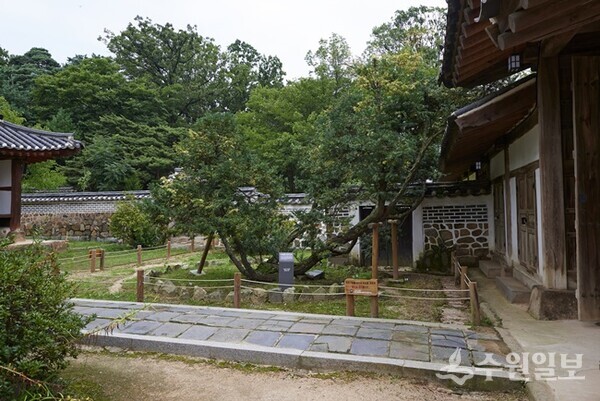
Cephalotaxus is an evergreen conifer shrub that normally does not exceed 3 meters in height.
However, this tree's trunk splits into three from the base, and when viewed from a distance, it displays a mysterious form as if three trees were standing together.
The 'Hwaseong Yungneung Cephalotaxus' is believed to have been planted around the time the reconstruction house was constructed.
It has quietly guarded the tomb since that era when the tomb was established at this location due to King Jeongjo's profound filial piety toward Prince Sado.
In particular, the robust vitality of the cephalotaxus, which grows steadily even in shade with little light, evokes King Jeongjo's tender filial devotion, which remained unbroken even in the dark shadows of power.
Having begun an era together with the royal court's sorrowful history and reaching the present day, it can be considered a living witness carrying the history of Yungneung.
This tree, long beloved as an ornamental plant due to its beautiful red fruit that forms in autumn, continues to touch the hearts of those who visit this place today.
Citizen B (52), who encountered the tree at the reconstruction house, said, "If I hadn't seen the information board, I would have walked past thinking it was just a large tree, but learning that it has guarded the tomb for over 200 years made me stop in my tracks," and added, "It's quite mysterious how one tree splits and grows like three."
Coinciding with the temporary opening, Hwaseong Mayor Jeong Myung-keun also emphasized, "Yungneung and Gyeongneung and the cephalotaxus are Hwaseong's greatest treasures and source of pride for its 1.08 million residents," and stated, "We will develop the value of Hwaseong's national heritage to create a premium cultural city."