"Increased fiscal expenditure in line with Democratic Party's policy direction" ... The 8th Elected Officials' Term Strikes Back Against 'Fiscal Bankruptcy Responsibility'
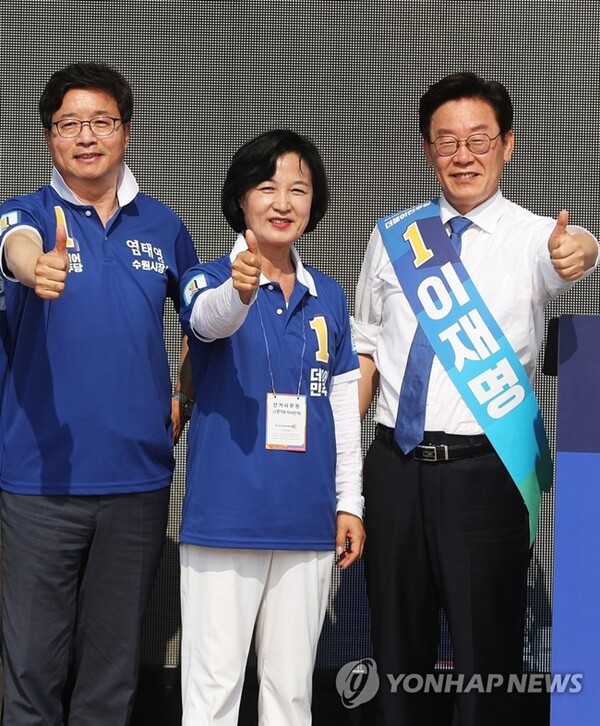
As Governor Choo Mee-ae raised the issue of local bond issuance and fund utilization and pointed to the fiscal management of the 8th elected officials' term as the cause of Gyeonggi Province's financial difficulties, officials who participated in provincial administration at that time have come forward to rebut.
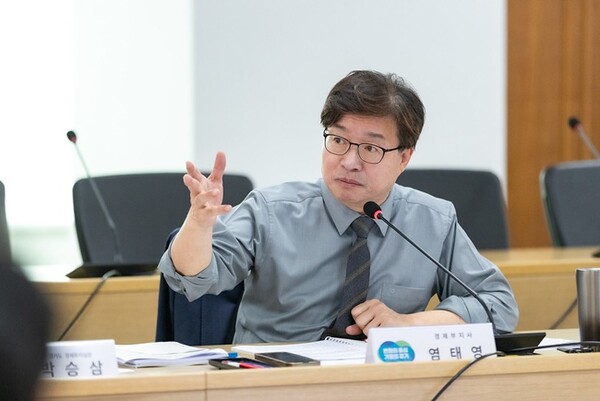
According to political circles on the 10th, the 8th elected officials' term, which Governor Choo identified as the cause of Gyeonggi Province's financial difficulties, is countering that the economic situation at the time and the direction of fiscal policy must be viewed together. Rep. Yeom Tae-young (Democratic Future Party, Suwon), who served as vice governor for economic affairs in the 8th elected officials' term, said, "What was necessary then was necessary then, and fiscal management is conducted according to the philosophy and policies of the provincial administration at that time."
Rep. Yeom said, "When the economy, especially the common people's economy, the grassroots economy, and the real economy are in difficulty, it is necessary to implement expansionary fiscal policy even by borrowing," and "that can serve as priming water." He continued, "Whether that is right or wrong depends on fiscal management principles and direction," and argued, "We cannot say that it is right now but was wrong then."
Person A, who participated in the 8th elected officials' term provincial administration, also drew a line, saying Gyeonggi Province cannot be viewed as being in a legally designated financial crisis. Person A, citing reasons such as current position, did not wish to be publicly identified by name.
Person A said, "Gyeonggi Province's main office does not fall under the fiscal caution or financial crisis category under the current Local Finance Act," and "it is necessary to judge based on facts according to criteria established nationally by the government."
This is confirmed by facts. According to the Ministry of the Interior and Safety, Gyeonggi's main office does not fall under the fiscally cautious or financially crisis category under the current Local Finance Act, and all six fiscal indicators checked by the Ministry of the Interior and Safety are below the caution level.
Person A argued that the issuance of local bonds was a policy choice made in response to economic downturn and decreased tax revenue at that time.
He said, "In a situation where the Yoon Suk-yeol administration emphasized fiscal soundness and reduced expenditure, the Democratic Party's direction was expansionary fiscal policy for the people's livelihoods," and "Governor Kim Dong-yeon increased fiscal expenditure in accordance with the Democratic Party's direction." He also said, "The increase was not for wasteful spending but for necessary expenditures," citing regional currency as an example.
Person A argued that there are factors that are difficult to explain solely by the fiscal management of the 8th elected officials' term in the causes of fiscal deterioration that Gyeonggi Province currently presents. He said, "The acquisition tax, the main source of provincial revenue, decreased due to a contraction in real estate transactions, and since the province does not receive common transfer taxes as a non-allocated local government, when the central government increases national treasury projects and requires local budget matching, it must spend its own money," and "the money coming in remained the same while the money that had to be spent increased."
However, Person A acknowledged that there is room for debate regarding the appropriateness of the scale of local bond issuance. He said, "It can be argued whether it was necessary to spend even by issuing local bonds," and "that is a matter of controversy." Yet he added, "That is different from the question of whether the 8th elected officials' term completely ruined it," and "fiscal problems are a process that has continued from the 7th elected officials' term (former Gyeonggi Province Governor Lee Jae-myung), and we spent as needed at each point in time."
Regarding the use of funds, the stance is that this is a fiscal management method generally permitted in local finance. The argument is that the method of utilizing surplus resources from individual funds through the Integrated Financial Stabilization Fund in the general accounting and later repaying them cannot itself be viewed as evidence of fiscal bankruptcy.
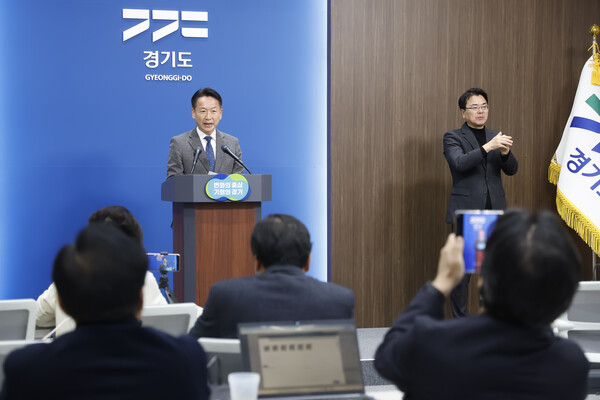
Meanwhile, the 9th elected officials' term is taking the position that fiscal management dependent on local bonds and funds cannot continue. Accordingly, Gyeonggi Province is currently pursuing a supplementary budget with a reduction of approximately 770 billion won and has begun restructuring expenditure. Governor Choo is arguing that if the current situation continues, there may come a time when local bonds need to be issued again in 2-3 years to repay existing debts.
Meanwhile, the former Governor Kim Dong-yeon side has not issued a separate statement on this matter.