Kim Chung-young's Suwon Microscope (124) Hwasung Royal Progress (4) Days 7-8: The Return Journey to Hanyang
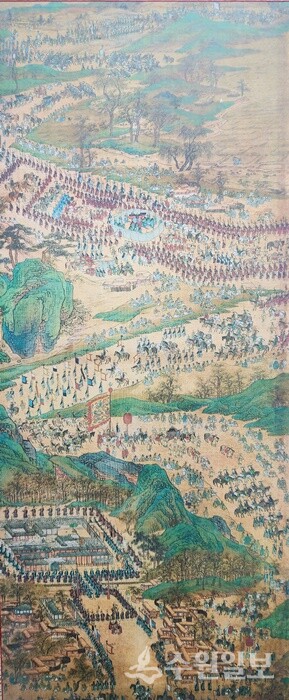
The seventh day of the Hwasung Royal Progress had arrived.
The four-day events in Hwasung concluded with archery at Deokjung Pavilion. Now only the return journey to the ordinary residence remained. The return route followed the same path as the journey there, but in reverse order.
Early in the morning during the Chen hour (7-9 AM), as King Jeongjo departed from Hwasung Palace, he issued commands.
"I am concerned about the advance scouts and hidden soldiers waiting for many days in Gwangju, Sihung, and Gwacheon. After the royal procession passes, I order the Bodyguard Command and General Military Command to relay instructions through signal arrows to withdraw the scouts and hidden soldiers in sequence."
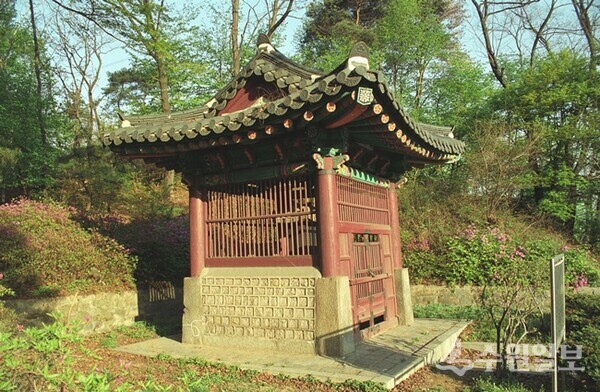
The procession then arrived at Mireuk Peak (Jijidae Pass). Upon reaching this place, Hyolyeongwon could no longer be seen. King Jeongjo commanded his officials: "When reaching this Mireuk Pass, I am reluctant to depart and find myself stopping the procession, gazing southward for a long while. Without realizing it, I wander on horseback. This time, looking above the pass, I noticed a circular stone location. Name that place 'Jiji' (遲遲), which means lingering. And henceforth, erect a marker stone below Mireuk Peak with the three characters 'Jijidae.' " From that time on, this pass became known as Jijidae Pass.
Around midday, the procession arrived at Sagun Inspection Station. King Jeongjo arrived before his mother and summoned Gwangju Magistrate Seo Mi-su, Sihung County Magistrate Hong Kyung-hu, and Gwacheon County Magistrate Kim Yi-yu to inquire about the problems and suffering of their regions.
When Hyegyeong Palace's palanquin arrived, she was received indoors and served lunch. After the meal, the procession resumed. Upon reaching Anyang Bridge, the party rested briefly and offered light refreshments to the mother. They then arrived at Sihung Palace. King Jeongjo arrived first, inspected the facilities, then received his mother inside and served dinner. The menu was identical to that of the journey to Hwasung.
On the eighth day (Lunar February 16), early morning during the Mao hour (5-7 AM), as the party departed from Sihung Palace, King Jeongjo spoke.
"The provincial governors should come to the royal road with the elders and common people from their regions and await the procession." This was to hear the people's opinions directly. At Mao hour, third quarter (around 6:45 AM), the procession departed from Sihung Palace.
As the procession reached the road in front of Munseong-dong, Sihung County Magistrate Hong Kyung-hu came with the common people to welcome the royal palanquin by the roadside. King Jeongjo paused and spoke.
"Typically, when the royal procession passes, benevolence is always bestowed. Today, I accompanied my mother and spent the night at Sihung Palace for the second time. Returning with everything in perfect safety is indeed a blessing. How could I be stingy toward the people? I shall certainly reduce their corvée duties, remove their burdensome problems, and widely extend a mother's benevolence to meet the people's wishes. If you have anything to say, do not hold back—speak freely."
Responding to King Jeongjo's request, the common people spoke.
"Fortunately, living in such a blessed and enlightened world, everything we wear and eat is not without Your Majesty's grace. There is nothing particularly troubling to bring to Your Majesty's attention."
Hearing this, King Jeongjo did not believe their words and pressed further.
"Such words are mere formality. All of you are my loyal subjects, and you constantly regret that grace does not reach those below. Moreover, being in the depths of the Nine-Fold Palace, I am unaware of the detailed suffering of common people. That is why I have called you before my palanquin to express what troubles you. To hear what I cannot ordinarily hear—the various problems beyond my reach—I wish to listen directly and respond to the hopes of all people viewing this procession. Given the opportunity to speak, what fear prevents your words?"
Sunsang Yi Ik-un relayed King Jeongjo's words to all the common people and reported their opinions back to him.
"The common people have no truly urgent and pressing afflictions. However, they report experiencing difficulties from being conscripted twice for household service duties."
King Jeongjo instructed Bibyeongsa Senior Officials Yi Si-su to widely announce his intentions to the people.
"In ordinary times, it would be difficult to extend exceptional benevolence, but how could this year be without special consideration? I have already issued an order to postpone the grain loans from autumn last year, but now I shall remit them entirely. Regarding household service duties, the Bibyeongsa shall consult with provincial governors and magistrates to devise ways to reduce problems and lighten burdens. Furthermore, every January when the king travels, common people have endured the hardship of clearing snow from the royal road and repairing paths—no small labor. From this year forward, I have scheduled royal travels for spring and autumn, the slack seasons of agriculture. This too stems from concern for the people. As the procession travels in the future, I shall carefully gather information on public sentiment. You must well understand when there are matters to remedy."
Hearing King Jeongjo's words, the people all offered blessings and withdrew. At this moment, one person requested food. King Jeongjo commanded Yi Ik-un to ask his age. He replied he was sixty-one years old. King Jeongjo said, "Although that person's behavior was presumptuous and lacked propriety, since I have already asked his age, how can I simply turn him away? Grant his wish and give him several measures of rice."
After resting in Munseong-dong, the procession resumed its journey. Upon arriving at Beondaebang Plain, King Jeongjo rested briefly and offered light refreshments to his mother. The procession then passed Manannhyeon and arrived at Noryangd Palace. King Jeongjo brought his mother to Yongyangbongjeo Pavilion and served lunch.
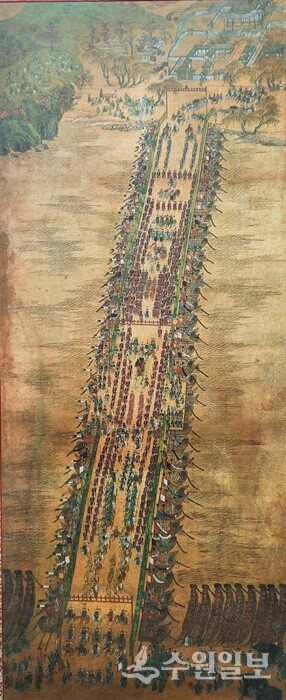
King Jeongjo summoned Yi Heung-un, the official managing the pontoon bridge, and granted him a gold ornament presented by Hyegyeong Palace. He also distributed rewards in varying degrees to the boatmen who had constructed the bridge. Additionally, he bestowed food to the Noryang Estate's officials.
King Jeongjo spoke to his assembled officials: "The eight-day journey has been arduous. My mother has maintained consistent good health, and now returning, I cannot contain my joy."
Record Keeper Sim Yi-ji and others said: "The rain on the tenth day was brief, lasting only half a morning, and the rain on the fourteenth came after the celebration... Thus we can see that even Heaven rejoices."
King Jeongjo replied: "The Crown Prince has been sending letters twice daily since the day I departed, inquiring about my well-being... " He then showed two letters from the Crown Prince. The first contained congratulations on the grandmother's sixtieth birthday celebration and feast for the elderly, while the second expressed boundless joy at seeing his father today. The officials read and offered congratulations. At this time, the Crown Prince was six years old; five years later, when King Jeongjo passed away, he ascended the throne as Sunjo.
King Jeongjo summoned Seo Yong-bo, the Senior Official responsible for constructing the Han River pontoon bridge, and commanded: "Tomorrow, dismantle the bridge and send the boats downstream so that the boatmen do not fall behind schedule." The pontoon bridge was dismantled the next day, on Lunar February 17, exactly twenty-three days after its construction.
The eight-day grand Hwasung Royal Progress had concluded.
Thus was recorded a historic moment—a 'once-in-a-millennium opportunity'—that might only occur once in a thousand years.