Kim Woo-young Gwanggyo Column 'Hwaseong Golden Coast Road', The Path My Heart Has Always Dreamed of
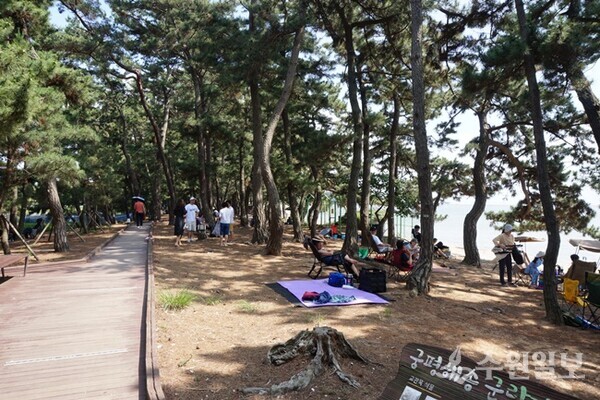
Perhaps that day the wind blew from the western sea. Judging by how my body followed my heart in that direction.
But the sun was too hot. While summer heat is natural, the wind blowing from the sea was also scorching.
When I was young, I preferred summer to cold winters. Whenever I had the chance, I wandered to mountains, fields, rivers, and seas.
But at some point, summer heat became unbearable. In cold winters, one can wear insulated padding and thermal underwear to get around, but there's no solution for heat. It's hot even when undressing.
That said, I don't prefer staying indoors with air conditioning all day because I worry about electricity bills and it's not good for health.
Moreover, I am someone who cannot sit in one place for long. Except when I'm concentrating on writing manuscripts.
It seems I must have the character for wind (風) in my destiny.
Heat... In fact, I have experienced extreme heat that surpassed imagination.
In summer 2017, I traveled to parts of the Silk Road including Urumqi, Dunhuang, Liuyuan, Jiayuguan, Hami, and Turpan.
Then I encountered what was truly the 'record-breaking' heat of my lifetime.
In Turpan, where Flame Mountain is located, I finally understood what 'flaming heat' meant. One could understand why in the ancient Chinese novel 'Journey to the West', Sun Wukong borrowed a banana leaf fan to extinguish the flames of Flame Mountain and pass through. It was natural that the mountain got its name from its shape and color that evoked flames, burning fiercely.
The guide told me that geothermal temperature exceeded 80℃, and I actually saw merchants who buried eggs in the soil to cook and sell them. It was truly a 'fiery hell'. (It is reportedly registered in the Guinness World Records as one of the hottest places on Earth where surface temperature reaches as high as 89 degrees.)
In the desert, some people had their shoe soles melted.
The daytime temperature in the city exceeded 50℃. At 1 a.m. in front of Turpan Station, the temperature of strong winds crossing the desert was over 40℃.
If asked whether I would go again, well, I would need to think about it deeply. At that time I didn't know it was that extreme and went on a whim... It's already been 10 years.
While not to that degree, recently when the afternoon temperature was 35 degrees Celsius, I walked the 'Hwaseong Golden Coast Road' on the west coast.
It was an outing with two high school seniors and classmates to get some fresh air.
After briefly taking in the sea scenery at Gungpyeong Harbor, we moved to the northern deck path. I wanted to see at least part of the 'Hwaseong Golden Coast Road' recently created by Hwaseong City.
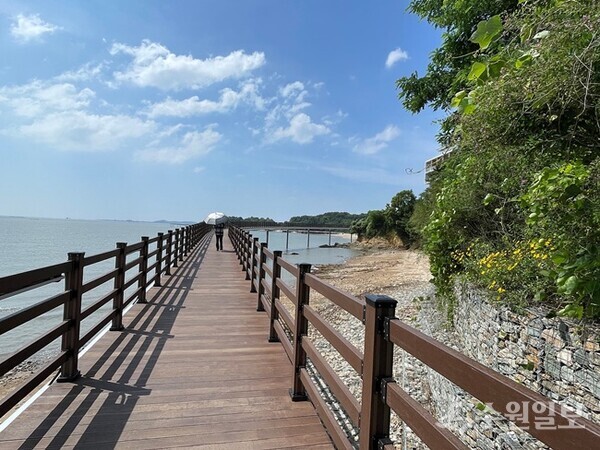
The 'Hwaseong Golden Coast Road' is a 17km-long walking trail following Hwaseong's coastline from Jebu Island through Baekmi Harbor to Gungpyeong Harbor. It got this name because you can see the spectacular sunset scene where the sea and tidal flats are painted in golden light as the sun sets.
Walking this path allows you to appreciate the grand and mesmerizing sunsets of the west coast, vast tidal flats, fishing village scenery, and dense maritime pine forests. In addition, you can feel the fresh sea breeze throughout your body and listen to the stories of gulls on this pleasant walking path.
Section 1 (5km) is the 'Sunset Viewing Path' starting from Jebu Island, where you can appreciate the coastal landscape while watching the setting sun. Section 2 (4.5km) is the 'Salt Sea Path' in Songgyo-ri where you walk on the sea and can enjoy the horizontal scenery of sea and salt fields. Section 3 (7.5km) is the Gungpyeong Tourist Path from Baekmi Harbor to Gungpyeong Harbor area, developed as a 'Coastal Tourist Deck Path' with photo zones and other facilities.
Our group started from Section 3 at Gungpyeong Harbor.
My friend, unable to endure the strong sunlight and heat, stopped in the maritime pine forest and traveled by car, but the other two kept saying "let's go a bit further," "let's just go to that corner and come back," and eventually walked all the way to Baekmi Harbor.
But this path showed such wonderful scenery that it was worth enduring the scorching 35-degree heat. While not quite matching Geumgangsan's Haegumgang or Samil Falls, it was a gem of a path worth making time to walk.
Of course, since it is not an officially opened path, information signs showing current location or the entire course haven't been installed yet, but it was unquestionably the best path I've walked in recent years.
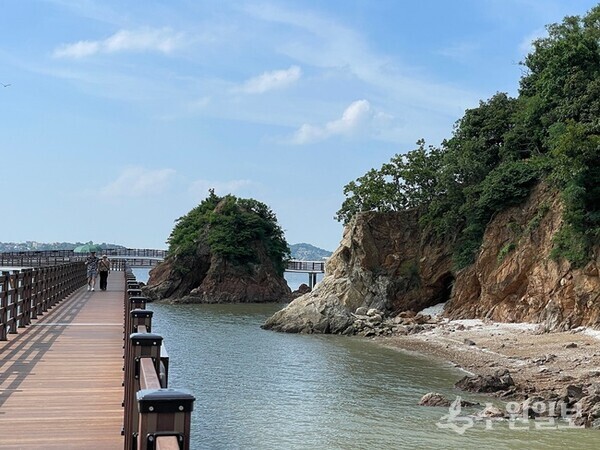
In fact, even before the Golden Coast Road was created, this path was quite well-known among walking enthusiasts. It was selected as one of 52 'pleasant coastal walking paths' by the Ministry of Oceans and Fisheries.
I heard from a Hwaseong City official that the substantial budget invested in creating this path was 'to make it a representative marine tourism resource of our country.'
They also said they expect positive循环 effects such as regional economic revitalization through increased tourist influx and spending.
Though only partial, my thoughts after actually walking part of Hwaseong Golden Coast Road were the same. Once this heat passes and autumn arrives, this path will overflow with visitors.
They will open their wallets at Gungpyeong Harbor, in Baekmi-ri, on Jebu Island, and at cafes and restaurants in the villages in between.
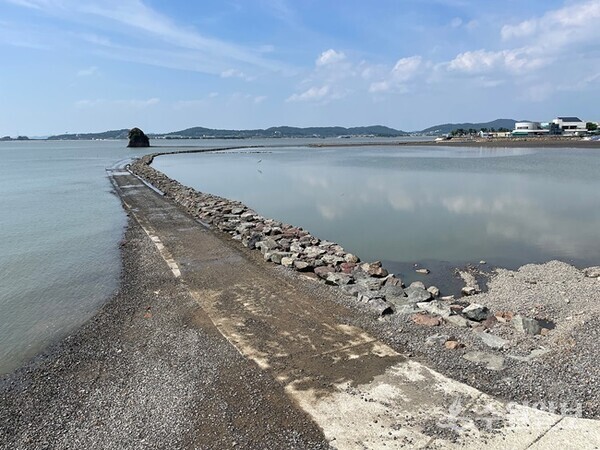
Hwaseong City's plan is to make this path not just a Hwaseong resource, but a national and even global marine tourism asset.
Once the shortcomings are addressed and it is officially opened, walking travelers from the Seoul metropolitan area and across the country will flock here. And the Hwaseong Golden Coast Road will be recorded as one of Mayor Jeong Myeong-geun's important achievements.