Choi Hyung-guk's Reflection (9) 瑈(Yu), 由(Yu), You – What Does It Mean to Understand?
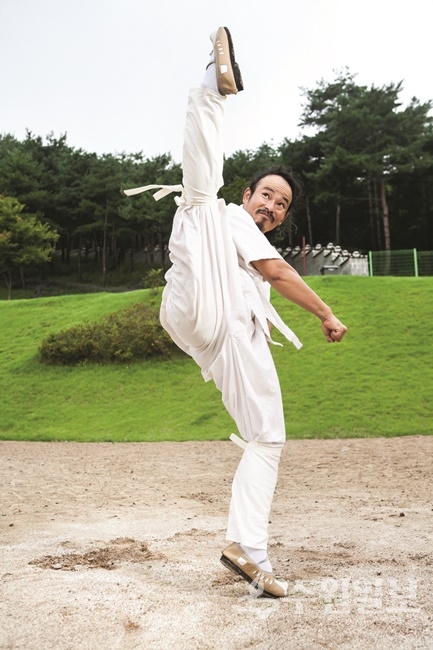
King Sejong's second son, better known to us as King Sejo (世祖), bore the name 'Yi Yu (李瑈)' before his posthumous title. In television historical dramas and novels, Sejo is often portrayed as a cold-blooded monarch—a fearsome king who ended the life of his young cousin Danjong after his brother King Munjong died prematurely due to poor health.
To prevent another coup d'état, Sejo made military affairs the foremost national priority. It was an inevitable choice to prevent another rebellion. For this reason, the section on Sejo appears disproportionately frequently in the <Byeonggi Chongseo (兵技總敍: Overview of Military Techniques)> portion of the 『Muye Dobo Tongji (武藝圖譜通志)』, which chronologically records the military achievements of previous kings.
Among these, what stands out is the 『Byeonggyeong (兵鏡)』, personally compiled by Sejo. This military treatise contains stories that Sejo, from the perspective of a general, deemed worthy of serving as models for soldiers. It is a type of moral instruction manual. Later subordinates renamed it 『Byeongjangseol (兵將說)』. Sejo had wanted to include the character 'gyeong (鏡)'—meaning 'mirror'—in the title. He wished to convey the message that one must always look inward at oneself and remain vigilant.
Sejo was a valiant prince. Unlike other princes, he consistently devoted himself to hunting and martial arts training, drawing King Sejong's attention from early on. His temperament was as firm as that of a general. Sejo wished to pour all that he knew about military training into the 『Byeonggyeong』. Yet even after becoming king, he himself could not properly practice what he understood. He merely sought to strengthen his power with greater firmness and precision.
Yu (由),
Among Confucius' disciples, there was also a person named 'Yu (由)'. 'Zhong You (仲由)' frequently appears in 『The Analects (論語)』, one of the most frequently referenced Chinese classics. The literary structure of 『The Analects』 consists of sayings Confucius imparted to his disciples. Thus, passages typically begin with 'the Master said (子曰)' followed by the name of a disciple.
'Yu (由)' was also called 'Zilu (子路)' or 'Jilu (季路)'. He was nine years younger than Confucius and among the Master's disciples, the most rough-natured, courageous, and stubborn. He was likely the oldest and most belated disciple among Confucius' followers, and there was good reason for this.
In his youth, Yu wore a cap adorned with rooster feathers symbolizing mercenaries (雄鷄: xiongjii), and fastened around his waist a belt of wild boar skin symbolizing valor (猳豚: zhìdùn), on one occasion disrespecting Confucius. Yet when Confucius taught him with propriety, Yu finally became his disciple. In modern terms, it would be as if a hoodlum in his advanced years came to his senses and began studying. Though he came to wisdom late, he became a disciple of Confucius, and people still remember him today—what a precious life that was!
Though the preamble grew long, in any case, the passage from 『The Analects』 that Confucius left for his disciple 'Yu (由)' is still remembered as a classic statement: '由(yu) 誨女知之乎(hui nu zhi zhi hu) 知之爲知之(zhi zhi wei zhi zhi) 不知爲不知(bu zhi wei bu zhi) 是知也(shi zhi ye).' It is a passage many have heard at least once in their lives. If you have not heard it, you may know it now. After all, there is no appointed time for learning. The author also began studying somewhat late, having spent time only riding horses and wielding swords.
The meaning is surprisingly straightforward. 'Yu, let me teach you what it means to understand (由 誨女知之乎). To call what one knows as known (知之爲知之), and to call what one does not know as unknown (不知爲不知), this is true understanding (是知也).' It speaks to the idea that true understanding lies in honestly accepting what one knows and what one does not know in one's own mind.
You,
All those reading this article are 'You'. There is even a humorous saying that when one hears the chirping of birds—'jiji-bae-bae'—the birds, too, seem to know 'zhi-zhi-wei-zhi-zhi, bu-zhi-wei-bu-zhi'. Within one's own life, what one 'knows (知之: zhizhi)' might surprisingly be easy. If one thinks according to how one lives, that is what occurs. Conversely, living according to one's thoughts is never easy. True 'understanding' is when one practices in one's life what one knows, and then contemplates and resolves it again and again.
Being of insufficient skill myself, I often feel bewildered and embarrassed when I study and encounter what I do not know. However, when I reach a state of not knowing what I do not know, a false 'confidence' appears like recklessness. Conversely, through comparison with others, I become engulfed in endless inferiority complexes. Rather than admiration, I am consumed by inferiority, and everything becomes a source of discontent. In this manner, as one ages, one becomes labeled a 'fossil' shouting 'in my day...'
Many people regard knowledge heard secondhand over someone's shoulder, rather than knowledge gained through their own body, as their own understanding. Though I have not pursued such deep study, I am always cautious and cautious again, vigilant and vigilant again. 'Unity of Knowledge and Action (知行合一)', it is a way of life that is never easy.