Choi Hyung-guk's Historical Essays (17) King Jeongjo's Philosophy of Governance: Two Characters—'Now (今)' and 'Use (用)'
The construction of Hwaseong Fortress in Suwon during King Jeongjo's reign transcended simple military strategy and defense, extending to the division of power concentrated in Seoul through the development of a new city. Even today, more than a quarter of the entire population lives crowded in Seoul, but the situation was no different in the late Joseon period. As more people flowed into the capital, residential areas gradually expanded beyond the city walls to accommodate common folk.
People follow capital. When capital accumulates and population increases, political power naturally strengthens. Over time, such strengthened power inevitably becomes corrupt. No matter how laws and institutions are employed to control it, their limitations are clear. Corrupt power demands more capital and leads to even more vicious corruption. This suffering is transferred entirely to the people.
Therefore, redistributing power fundamentally requires the restructuring of space. King Jeongjo built Hwaseong Fortress in Suwon to dismantle the monopolistic power held by Seoul's vested interests, creating a new space representing a commercial city. Even today, various government-related public institutions are gradually relocated and dispersed to Sejong, Jeonju, and other regions across the nation for the same reason.
King Jeongjo loved Hwaseong Fortress. The results of that love can be seen through Uigwe (official records), a form of state report, and military treatises. At the core of these are three books: 『Hwaseong Seongyeok Uigwe (華城城役儀軌)』, 『Wonhaeng Eulmyo Jeongni Uigwe (園幸乙卯整理儀軌)』, and 『Muye Dobo Tongji (武藝圖譜通志)』.
Hwaseong Fortress was built with the official purpose of protecting the relocated tomb of his father, Crown Prince Sado, moved from Baebongsan in Yangju to Hwasan (花山) in Suwon, and it served as a symbol of protection that embodied filial piety. 『Hwaseong Seongyeok Uigwe』 contains this meticulous spirit of protection. Every building comprising the fortress, and even each stone, was drawn with great detail. Furthermore, the tools used in constructing the fortress were systematically organized.
『Wonhaeng Eulmo Jeongni Uigwe』 records the eight-day journey to Hwaseong Fortress, which King Jeongjo undertook on horseback to commemorate his deceased father and protect the people. It was a special expedition for the sixtieth birthday celebration of his mother, Hyegyeong-gung Hong, who was the same age as his late father. It depicts thousands of military personnel in procession and nighttime military training conducted at Hwaseong Fortress with meticulous brushwork.
Finally, 『Muye Dobo Tongji』 is a book that unified Joseon's martial arts, centered on soldiers of the Jangnyong-yeong (Loyal Brave Camp) who guarded Suwon's Hwaseong Fortress. This military treatise was compiled to unify martial arts training not only for core military units defending the capital such as the Hunryeon-dogam (Training Command), Geumwi-yeong (Guard Command), and Eoyeong-cheong (Royal Guards Command), but also for garrison troops nationwide. The book covers detailed explanations of martial arts movements as basic content and consolidates everything from the materials needed to manufacture weapons for learning each martial art to the historical significance of the martial art in one place. The preface even contains praise from King Jeongjo stating that 'once one opens this book even once, one can come to understand the mysterious workings of martial arts on one's own'.
All three of these books have been so profoundly significant that they were inscribed as UNESCO Memory of the World heritage. What runs through these three books related to Suwon's Hwaseong during King Jeongjo's reign is 'practical utility (實用)'. The spirit of practicality means something that can meaningfully be put to use in the present age, and through its meaning, enables future generations to grow one step further.
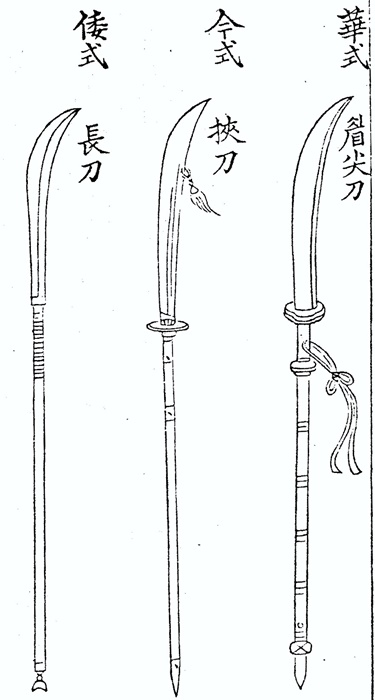
Hwaseong Fortress suffered considerable damage through Japanese colonial rule and the Korean War, but it was restored based on 『Hwaseong Seongyeok Uigwe』, the finest construction report of that era, and proudly inscribed as a UNESCO World Cultural Heritage. 『Wonhaeng Eulmo Jeongni Uigwe』 is valued as an important historical source through which one can glimpse microhistorical aspects of royal court culture during King Jeongjo's reign, including food culture, costume culture, and military processions. Furthermore, 『Muye Dobo Tongji』 contains traces of how Chinese martial arts such as shuangshouDao (double-handed sabers) and Japanese martial arts such as Japanese swords were absorbed into Joseon military martial arts, along with various equestrian martial arts connected to Mongolia and northern nomadic peoples. Through this, it is recognized as invaluable historical material through which one can observe the transformations of military martial arts and body culture of that era.
The spirit of 'practical utility' that runs through King Jeongjo's era is explained clearly in 『Muye Dobo Tongji』 as follows:
"Let officials promote the policies of practical utility, let the common people uphold the livelihoods of practical utility,
Let scholars compile the writings of practical utility, let soldiers practice the martial arts of practical utility,
Let merchants circulate the goods of practical utility, and let craftsmen manufacture the implements of practical utility—then
what concern would there be in guarding the nation, and what hardship in protecting the people!"
"朝廷講實用之政 黎庶守實用之業 文苑撰實用之書 卒伍肄實用之技
商賈通實用之貨 工匠作實用之器 則何慮乎 衛國何患乎 保民也哉"
(『Muye Dobo Tongji』 "Byeonggi Chongseo")
Conversely, if politicians examining state affairs pursue false policies solely for factional interests, the nation perishes. If the people, the foundation of the economy, indulge in vain fantasies and extravagance, families and village communities collapse. If scholars, the axis of learning, neglect writing and merely cite absurd theories, the world of learning darkens.
If soldiers, the foundation of national defense, fear personal training and fail to sharpen their weapons, they expose themselves to threats of war. If merchants managing the flow of goods and supplies lose their pioneering spirit and focus solely on monopolistic profits, the flow of commerce stagnates. Finally, if industrial workers, the pillars of productive activity, manufacture defective equipment or fail to perform proper maintenance, machinery halts.
When this occurs, only a small number of privileged classes monopolize wealth and honor, making national defense itself meaningless, resulting in a world of no value in protecting the people. This transcends left or right ideology and concerns the essence of the fundamental question: 'what should we center our lives upon?'
The character most frequently appearing alongside 'yong (用)' in 『Muye Dobo Tongji』 is 'geum (今)'—'now'. The answer to the question 'what is useful to us right now?' is 'practical utility (實用)'. And 'now (今)' is the starting point advancing toward the 'future'. While people often discuss 'practical learning (實學)' and 'seeking truth from facts (實事求是)', they sometimes fall into the realm of empty theory. True practical spirit lies in first deliberating what we must do now for the sake of future generations.
Even if the present is somewhat painful and difficult, our role in living through this time is to shed an extra drop of sweat not for ourselves, but for posterity.