Choi Hyung-kuk's Column (28) Kwonbeop (拳法), The Beginning and End of Understanding Martial Arts Through Cultural History
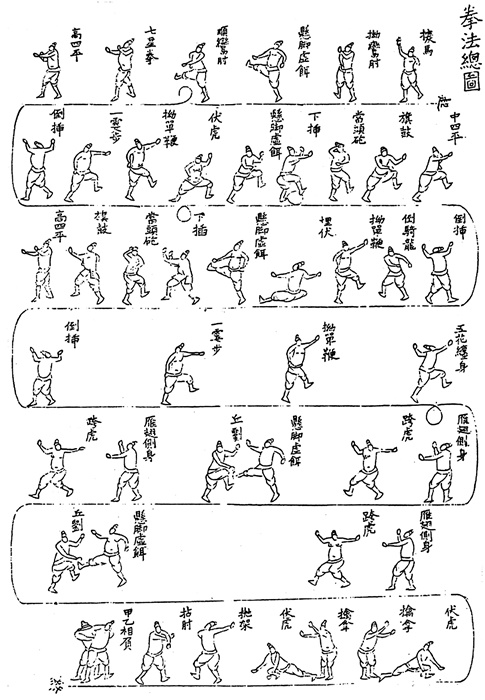
- "Choshak Ipye Jimun" (初學入藝之門)!
The longing for martial arts is intense. One punch sends a person flying; one kick shatters a pillar. Such imagination. Yet in reality, it is never easy. Rather, the opposite is often true. After barely running one hundred meters, your breath catches in your throat, and in daily life, you hardly ever lift your feet above knee height. That is the daily life of modern people. This is why it is necessary to train in martial arts like gymnastics as part of everyday life.
In the Joseon Dynasty, too, kwonbeop was trained in military camps much like gymnastics. Kwonbeop, a bare-handed martial art, was the foundational physical training method for learning all martial arts. For this reason, kwonbeop was called "Choshak Ipye Jimun" (初學入藝之門)—literally, the gateway for beginners to enter the art. In other words, it was understood that the process of building the basics of body usage, like a gateway for beginners to master martial arts, was embedded in bare-handed martial arts. First, one must know their own body, then they can wield a sword, an axe, or any weapon.
If one fails to properly understand even their own body and blindly clings to heavy and sharp weapons, what should be a means to overcome an opponent becomes instead a useless gesture that harms one's own body. Martial arts is the act of strengthening and understanding one's own body, filling and disciplining the mind. The wild nature unique to humans for surviving in harsh nature—and on the basis of this wildness, martial arts is born as a symbolic embodiment of the most scientific and practical intellect. When further reinforced by faith in one's own body and mind, it develops to the stage of spirituality. This is why martial arts is understood as a unique human "body culture."
By examining the kwonbeop that soldiers of late Joseon mastered, one can glimpse the cultural-historical flow of martial arts. It is similar to researching martial arts culture through Taekwondo. The very process of researching how Taekwondo was created and spread can become an important key to understanding Korea's martial arts culture today. The kwonbeop recorded in the 'Muye Dobo Tongji' is based on several books, including the 'Jixiao Xinshu' written by Qi Jiguang of Ming China. However, rather than simply mimicking contemporary movements as they were, it was recorded in a Koreanized form of kwonbeop due to differences in body culture.
By examining kwonbeop more deeply, one can discern its meaning. First, the kwonbeop disseminated to military camps in late Joseon was spread in the form of sequences (譜) created by directly connecting Chinese bare-handed martial arts kwonbeop. This became a background that created the possibility of localization, different from the training methods of kwonbeop described in books like the 'Jixiao Xinshu', enabling its use in the testing and evaluation of Joseon military soldiers.
Second, the most important reason why Joseon military had soldiers learn kwonbeop was to adopt it as a standard for universal physical training to enable more smooth use of other weapons. In kwonbeop, the action of striking with a fist is divided according to height into upper level (上平), middle level (中平), and lower level (下平), and this same classification was applied in spear techniques (槍法). For example, the movements of high four-level stance (高四平勢) or middle four-level stance (中四平勢) in kwonbeop could be directly applied to the striking heights in long spear (長槍) techniques such as upper, middle, and lower level spear strikes. In the case of the compass needle stance (指南針勢) of the long spear, it could be understood as upper level, and in the case of the ten-sided ambush stance (十面埋伏勢), training could be connected to lower level spear techniques (下平鎗法).
Moreover, special weapons like the wolf-fang spear (狼筅) or the crescent-shaped weapon (鐺鈀) required essential basic physical conditioning and flexibility enhancement due to their weight and length. Therefore, kwonbeop training was the most effective method for transforming soldiers' ordinary "bodies" into martial arts-trained "bodies." This warrants closer examination.
The core technique of kwonbeop in the 'Muye Dobo Tongji' was not about achieving powerful striking force. Rather, it primarily had the character of a kind of manual gymnastics for smooth use of hands and feet. A typical example is the positioning and form of the rear hand, which serves as the foundation when wielding weapons with both hands, and the front hand, which determines the direction of attack—collectively called "yin-yang hands" (陰陽手). This corresponds to the most basic training for learning weapon techniques. Kwonbeop was also the most effective training method for mastering the basics of yin-yang hands. The movements were mainly centered on hand techniques rather than leg techniques, and such kwonbeop stances could be directly utilized when honing weapon skills like spears or swords.
Furthermore, in kwonbeop, stances such as the ambush stance (埋伏勢), where the body is lowered completely as if sitting to attack the enemy with hands or feet, or the crouching tiger stance (伏虎勢), show almost similar body movements to the ambush stance (埋伏勢) or low-level stance (低平勢) of the rattan shield (籐牌). Due to this enhancement of weapon-utilization ability through kwonbeop, in the military examination (觀武才), the "kwonbeop hand" category of killer techniques (殺手) tested not only kwonbeop but also whip-staff (鞭棍), gripped sword (挾刀), staff-and-club (棍棒), and bamboo long spear (竹長槍). Therefore, the dissemination of kwonbeop in late Joseon can be said to have broadened the range of application of various short-range close-combat weapon techniques disseminated from Ming China.
Third, as continuous forms evolved into a combat form where two people faced each other with their bodies in contact and practiced in coordination, it transformed into more practical movements. Especially as grappling techniques were added—not just simple striking, but joint locks and restraints at close range—the utility of kwonbeop expanded further.
Moreover, as the saying goes, "Kwonbeop has fixed stances, but in real combat, there are no fixed stances." Through kwonbeop training, one can understand the crucial concept of "stance" (勢) in combat, including weapon techniques. This means that while there are set "postures" for training purposes, when applied in real combat, there are no "postures."
In other words, in actual combat, one must adapt and apply various changes based on the situation, grounded in training. In real combat, one cannot subdue an opponent simply using Taekwondo "Koryo" or "Keumgang" patterns, but must adaptively respond to situations by utilizing the various movements contained within them.
Finally, the most distinctive characteristic of kwonbeop's establishment in late Joseon is that the state actively promoted its dissemination. This was a unique method of martial arts transmission and establishment found only in Joseon, unseen in other countries like China or Japan. Through this, Joseon's kwonbeop could take root more rapidly through soldiers and was designated as a subject in various military examinations such as military talent displays (觀武才) or selections (試取), enabling stable training.
- Cultural Transformation of Kwonbeop Begins with Children's Play
Although Chinese kwonbeop was disseminated to Joseon soldiers, it naturally became Koreanized and established as another form of body culture. Such changes in martial arts are natural. This is why martial arts must be examined as part of "culture." If Chinese culture differs from Joseon's indigenous culture, even if the same kwonbeop were disseminated to Joseon, it would naturally become Koreanized over time—this is entirely expected.
In the 'Muye Jebo' (武藝提補), the first martial arts manual created during the Imjin War, the cultural phenomenon of martial arts was explained thus: "It is said that our country's people use spoons when eating, while Chinese people use chopsticks. If we were to make Chinese people use spoons and our country's people use chopsticks, each would surely feel unfamiliar discomfort. This is because of familiarity and unfamiliarity. Even with something like using spoons and chopsticks, how much more so with the use of swords and spears? Though archery is our country's special skill, how can we master only that one and neglect other martial arts?" In this way, unfamiliarity with changes in martial arts culture was compared using the culinary culture of chopsticks and spoons.
To overcome the Imjin War, Joseon military had to rapidly introduce Chinese kwonbeop into military camps. However, Chinese body movements, different from ours, could not easily spread. Thus, Joseon implemented a special measure: it began disseminating kwonbeop as children's play.
In the 'Seonjo Sillok' (宣祖實錄), one can glimpse how diverse methods were sought to disseminate kwonbeop. "Kwonbeop is a martial art for cultivating courage, and if young children were taught it, village children would observe and practice it, making it their play, which would be beneficial later. Select children to learn these two martial arts and have them receive instruction from General Lee Jung-gun as before. By this, report to the Training Command. Thereupon, they marked the two diagrams concerning staff-and-club and kwonbeop from the 'Jixiao Xinshu' and sent them down, saying, 'Show this method to the Training Command.'"
In this way, cultural dissemination is possible not through coercion but by naturally seeping into the cultural foundation. Naturally, in that process, Chinese body movements became entertaining play and were newly transformed to suit Joseon children's bodies. Slowly, Joseon's kwonbeop spread along the alleys.
Martial arts is a body movement that disciplines the body and enriches the mind. By developing strong, resilient ligaments and muscles, and solid bones, one frees the body. Within that body, courage and self-esteem are cultivated. No matter how brilliant and beautiful one's thoughts, only through a healthy body can they find their proper place.
At that foundation lies kwonbeop, bare-handed martial arts. The endurance to withstand the weight of heavy weapons with one's two hands and the quickness to rapidly defend against a sharp enemy weapon are stabilized through kwonbeop. Going a step further, martial arts means learning with one's body how to endure and enjoy life's monotony. The strength to endure a tedious and harsh life is embedded in martial arts training. Therefore, if one learns martial arts enjoyably as one would enjoy recreation, life becomes joyful. This is the fundamental reason I have practiced martial arts for so long.
Yubiwuhan (有備無患)—when preparation is made beforehand, there is no worry. Health is the same. One must preserve health while healthy; it is when one is sick and weary that one's true health becomes evident. By gaining through martial arts the body movements essential to my body, another world of the body will unfold.
* Thank you for reading Choi Hyung-kuk's "Kaljapi Column" all this time. I am taking a break from writing to allow time to examine my own body. Next time, I will return with more spirited and abundant stories. If you wish to encounter deeper stories about martial arts through books, I recommend my works "Martial Arts Humanities" and "Jeonguk Muye Dobo Tongji—King Jeongjo, Communicating Through Martial Arts." My website is http://muye24ki.com. I always wish you good health of body and mind, pressing my two hands together in respect.