Kim Chung-young's Suwon Microscope (126) Hidden Scenic Beauty of Suwon Fortress: Silver Grass Fields Harmonizing with Fortress Walls
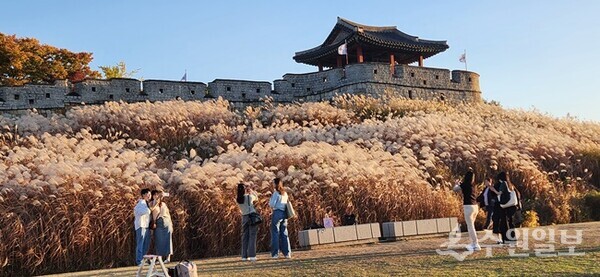
December 6 this year marks the 26th anniversary of Suwon Fortress being designated as a UNESCO World Heritage Site.
After the UNESCO designation, Suwon City made no effort to restore and maintain fortress facilities and improve the poor environment surrounding the fortress walls, resulting in significant changes.
The goal was not simply to display the fortress walls. It was to enhance Suwon's identity through Suwon Fortress and create a prosperous city through it.
It was not easy. Providing the three elements of tourism—food, sightseeing, and shopping—required time, effort, and funding.
The beginning started with establishing permanent performances of the 24 Martial Artists from "Muye Dobo Tongji," which King Jeongjo took great interest in completing, from 2004 onward. As the permanent performance reached its 20th year, it has now become a signature performance of Suwon.
The second was a plan to clear slum areas and create silver grass fields in parks outside the fortress walls as a way to create attractions. The person who actively recommended this project was Professor Jang Jae-hoon of the Traditional Culture School (former Director of Cultural Properties Management Bureau, former Cultural Heritage Review Committee member).
It is said that no trees were planted in front of the fortress walls. If trees existed around the fortress, they would become obstacles during wartime, making it difficult to observe the enemy.
Instead, silver grass was planted around the fortress walls. Silver grass was used as material for fire arrows, as roofing material for thatching, and its spring shoots were used as vegetables and famine relief food. Moreover, it was used as herbal medicine due to its many medicinal effects. The silver grass flowers planted on Professor Jang Jae-hoon's recommendation became the finest hidden beauty of Suwon Fortress.
Food concerns were somewhat addressed when the "Suwon Eco-Mobility 2013" event transformed the Shinpung and Jangan-dong areas into a cafe street. Shopping needs are met by the 230-year-old traditional market around Paldalmun Gate, which continues to attract tourists and citizens.
Now, silver grass flowers are creating a spectacular display around Suwon Fortress.
Silver grass fields around Suwon Fortress are located outside the Southeast Corner Bastion behind Jidong Market and in the Yeonmu-dong area connecting from behind the Northeast Solid Bastion to Yongyon. The silver grass fields in the section extending from Hwaseo Gate to Paldal-san Hoejuheui also evoke admiration.
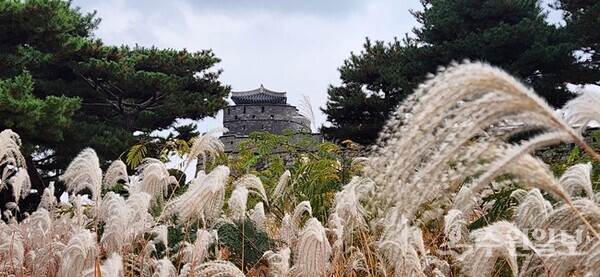
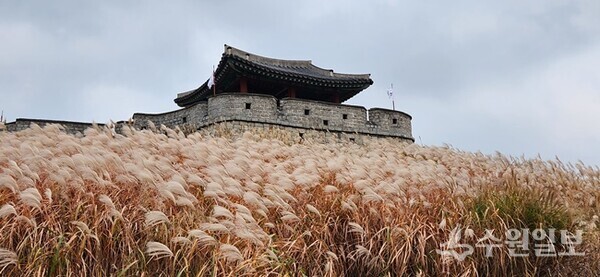
The silver grass field behind the Northeast Solid Bastion was created in 2006. Parking at the Yeonmudae Parking Lot and heading to Changryong Gate Intersection, then turning toward the back of the Northeast Solid Bastion, the silver grass field comes into view. Looking at the fortress walls and Northeast Solid Bastion from below the silver grass field, the swaying silver grass flowers create a spectacular display.
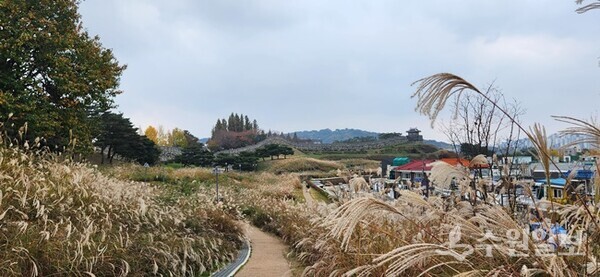
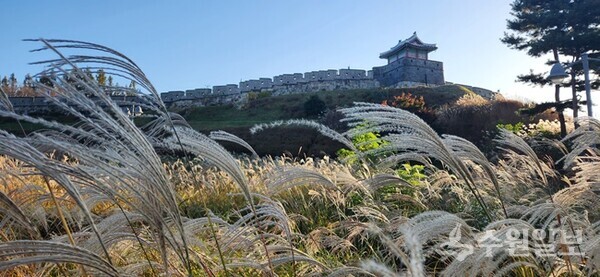
Walking along the fortress walls and passing through the Northeast Secret Gate leads to the silver grass field above Yeonmu Parking Lot, created in 2017. With silver grass flower tunnels on both sides of the walking path, visitors become immersed in the beauty harmonizing with Suwon Fortress.
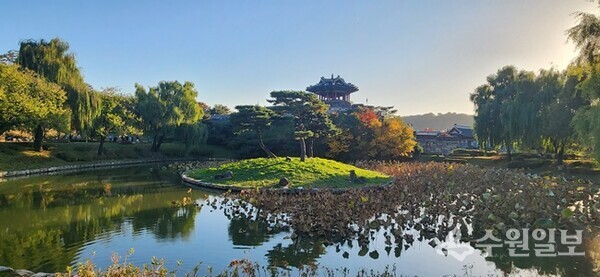
Continuing along the path, visitors encounter silver grass fields around Yongyon. These days, young men and women line up to take photos against the backdrop of silver grass flowers. It is said that the things people never tire of watching are first, people; second, water; and third, fire. Here, visitors can enjoy autumn's landscape without the fire.
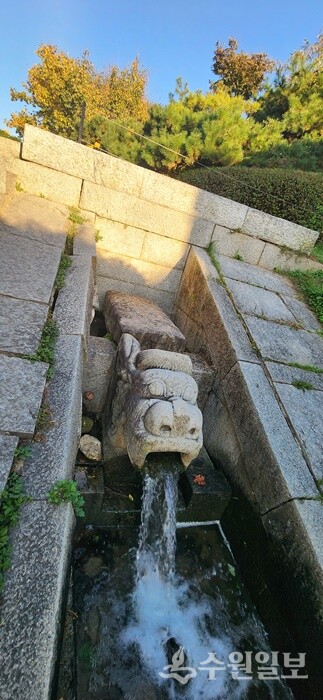
Beyond Yongyon stands Hwahong Gate. A stone water serpent behind Hwahong Gate spouts water from its mouth.
The reason water from Yongyon is made to spout through the serpent's mouth is said to convey to the water serpent that failed to become a dragon that if it stops its tricks and manages water well, it will be ascended to heaven.
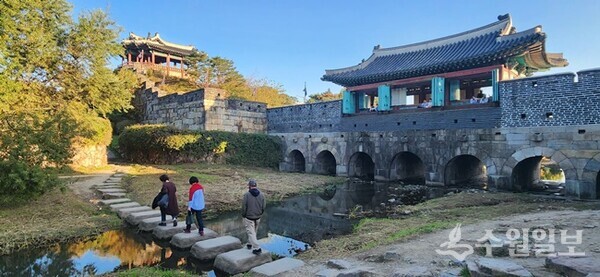
Upon crossing the stepping stones behind Hwahong Gate, visitors encounter the seven-bay water channels of Hwahong Gate. Hwahong Gate means "rainbow gate," and our ancestors understood that rainbows have seven colors.
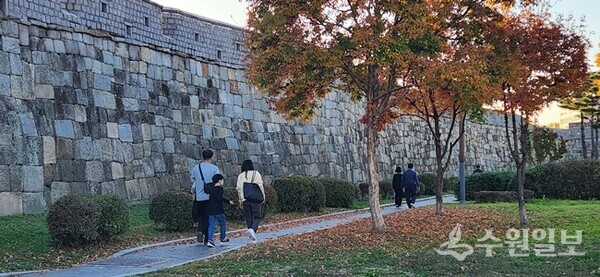
Continuing along the fortress walls through the Younghwa-dong area for 200-300 meters leads to Jangan Gate.
Jangan Gate is the main gate of Suwon Fortress but has endured much hardship. In the 1920s, the Japanese colonial authorities demolished both sides under the pretext of building roads, turning Jangan Gate into an island. During the Korean War in 1950, when North Korean forces hid inside Jangan Gate, UN forces dropped bombs, collapsing the gate tower.
It was restored during the Fortress restoration project from 1975 to 1979. In 1995, Mayor Shim Jae-deok of the first privately-elected administration built pedestrian overpasses on the severed sides to create a complete circuit around the fortress. There was much debate about building metal bridges at that time.
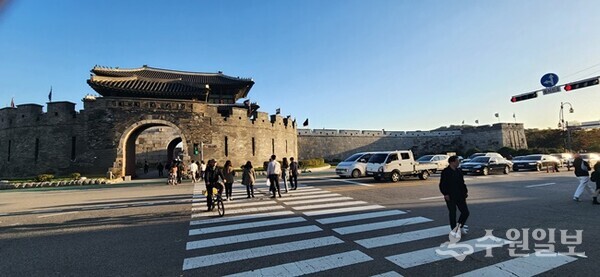
During my tenure as Director of the Fortress Project Office, the Cultural Heritage Administration granted approval on a time-limited basis with the condition of removing the metal bridge. At that time, I thought this was an opportunity to connect Jangan Gate. By pooling our heads with members of the Suwon Fortress Research Association and experts, we found a solution: connect the western portion as it is now and connect the eastern side with a bridge. Thus, citizens can now pass through Jangan Gate.
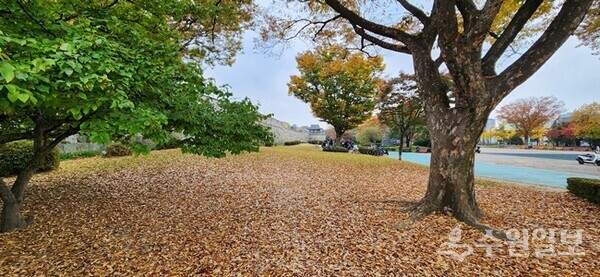
Beyond Jangan Gate is Jangan Park. This is a park I participated in creating when I received my first civil service appointment. Large trees were not planted in 1979 to avoid blocking the fortress walls, but the small, slender trees planted then have grown into large trees over the 44 years since. Jangan Park has become a beloved destination for citizens.
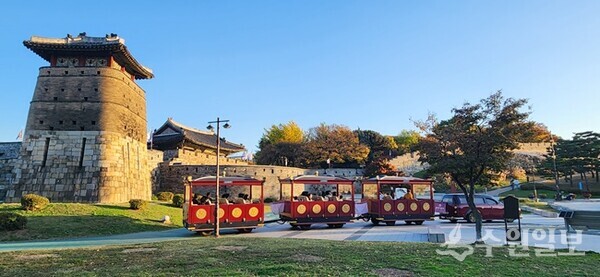
Beyond Jangan Park lies the Northwest Solid Bastion and Hwaseo Gate. These are among the few original structures among Fortress facilities. The Northwest Solid Bastion was not in the original design but was built on King Jeongjo's orders. King Jeongjo took great pride in the Northwest Solid Bastion created from his own design.
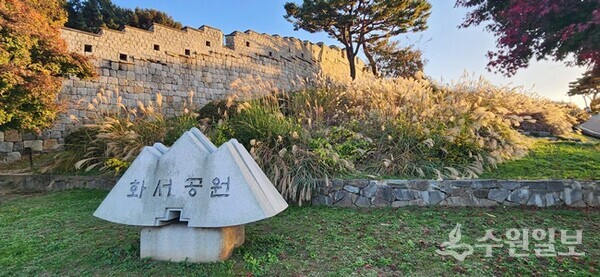
Crossing the street toward Paldal Mountain, a marker stone bearing the name "Hwaseo Park" comes into view. This marker stone was erected in 2004 at my suggestion. The parks surrounding the Fortress were designated as Paldal Park on the west side and East Park on the east side of Jangan Gate. However, the park outside the fortress walls created during the 1975-1979 Fortress restoration project was called Jangan Park. Many people use Jangan Park as a meeting place.
It seemed ambiguous to call the park created after demolishing Seomun Apartment by names such as Paldal Park or Jangan Park. That is why I decided to use the alias Hwaseo Park to indicate place identity.
Entering Hwaseo Park, silver grass fields extend along the fortress walls. This is the original prototype of Suwon Fortress silver grass fields.
In 2007, a female student lost her phone in the silver grass field and, unable to find it, thought it would be visible if she burned the grass, so she set a fire. What happened after is beyond imagination.
As autumn deepens, I recommend walking through the silver grass fields outside the fortress walls before it's too late.