FAR Trading System Proposed as Solution to Regulations and Property Rights Issues in Suwon's Historic District
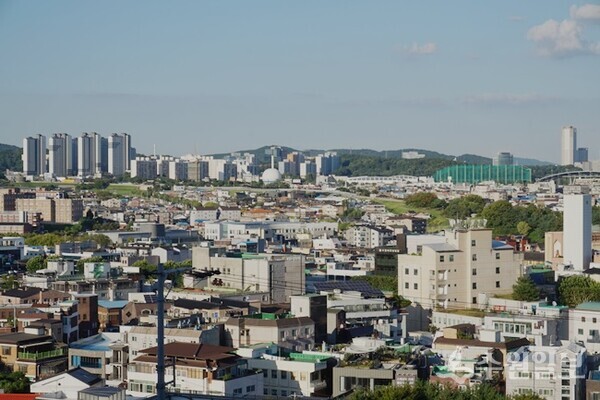
[News S=Reporter Lee Min-jung] As South Korean cities develop, the need for regulations to preserve national cultural heritage has emerged alongside concerns about infringement on residents' property rights. In this context, a proposal suggesting that the 'Floor Area Ratio (FAR) Trading System' is a solution to issues faced by 'historic and cultural cities' is drawing attention.
Dr. Seo Ju-ho, vice president of the Hwaseong Research Association and chairman of the Gyeonggi Chapter of the Korean Architects Association, has put forth solutions to historic district problems in his recently completed doctoral dissertation, 'Study on FAR Trading System in Historic and Cultural Cities,' using the Suwon Hwaseong District as a research subject.
According to Dr. Seo, the 'FAR Trading System' is a system whereby regulated or unused floor area ratios in areas restricted to protect national heritage can be sold to development areas that need them.
It is a system for trading 'floor area ratios' rather than 'development rights.' The method allows the public to purchase the regulated floor area ratios from conservation districts when implementing area development that can relax land use regulations or increase development density. Through the FAR trading system, Dr. Seo emphasized that historic and cultural cities must continue to develop while establishing a system that can sustainably preserve national heritage and compensate residents for property rights losses.
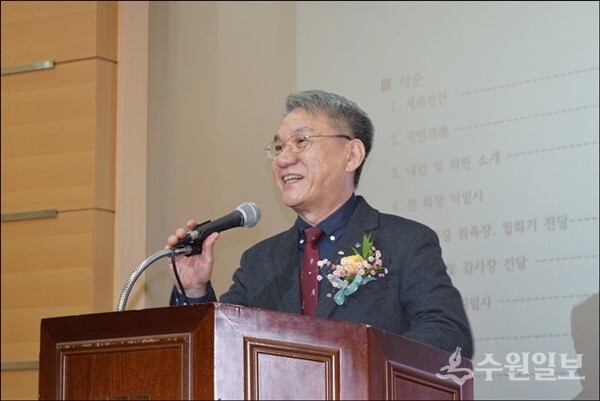
He first considered the 'value of exportable floor area ratios' in the Suwon Hwaseong District. If exportable floor area ratio has no value, the effectiveness of the 'FAR trading system' would be diminished.
Additionally, he conducted a citizen awareness survey to understand the effects citizens believe would result from introducing the 'FAR trading system.'
The dissertation includes verification results of 'exportable floor area ratio value' and 'the mediating effect of the FAR trading system shown in citizen awareness surveys,' and by researching the basis for introducing the 'FAR trading system,' it proposes sustainable development policies for historic and cultural cities.
Dr. Seo states, "The 'FAR trading system' can address the task of compensating residents for property rights damage without financial burden on local government, while also playing a role in sustainable development of historic and cultural cities."
Research results on 'exportable floor area ratio value' have yielded very large figures, which could serve as an effective measure when establishing urban regeneration projects and redevelopment plans centered on Suwon's historic downtown.
He noted that it has been empirically verified that the 'FAR trading system' has a 'partial mediating effect' by influencing 'sustainable development.'
Therefore, if Suwon introduces the 'FAR trading system,' both the current and future generations will be able to enjoy better lives, and results of a 'sustainable development city' will be realized, he forecasted.
Dr. Seo emphasized the need for a paradigm shift in perception—viewing 'floor area ratios' restricted for 'national heritage preservation' as another asset, and recognizing through the 'FAR trading system' that compensating residents for property rights 'losses' is the same as 'preserving' 'national heritage.'
He also suggested the need to review a 'Suwon-type FAR trading system' while simultaneously resetting district designations in a unified manner. He pointed out that the current mismatch between 'National Heritage Appearance Change Allowance Standard Lines' in 'historic and cultural environment preservation areas' and the 'Suwon Hwaseong District Unit Planning Zone' causes unnecessary disputes and wasteful elements through confusion and complexity in urban management.
In connection with projects such as the designation of the Haenggung-dong Coexistence Cooperation District, Dr. Seo proposed a policy approach of bundling 'exportable floor area ratio value (monetary amount)' and 'hanok support funds' to encourage construction of more traditional Korean houses that meet the purpose of 'Suwon City Hanok Support Ordinance' in first-class general residential areas within the fortress walls, thereby improving residents' living environment conditions.