Kim Man-gon's Education Forum The Truth About Studying Told by a Star Math Tutor
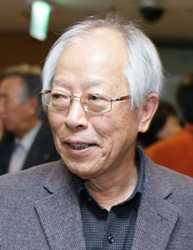
The virtue of 'effort,' long recognized as a model of moral teachings, has become the target of young people's satirical parodies. When people jokingly shout "Ef-fort!" at something difficult to achieve, there is a certain embarrassment about having lived that way.
A famous math tutor said so on a popular talk show. Elementary students become 'math dropouts' at fractions, middle school students at square roots, and high school students at functions and calculus. While it is certainly advantageous to be born with genes for studying well, he said that blaming one's failure to get a grade 1 on the College Scholastic Ability Test on not being born with such genes is merely an excuse.
Why? Because the math problems on Korea's College Scholastic Ability Test ask whether students understand the concepts themselves. It is simply a subject that can be mastered through understanding and practice, not memorization, he explained.
He also made an important point: it is not desirable to call the answer to a math problem a 'model answer,' but rather 'Teacher ○○○'s Opinion.' While the host laughed it off, this is a very important perspective that our elementary, middle, and high schools should adopt as a guideline. Even in elementary schools, some teachers cut off the sprouting of thought by saying things like, 'Why are you doing it a different way?' or 'It's faster to follow the textbook,' or injecting the prejudice that the textbook method is more efficient. In middle and high schools, where learning is already more rigid, students would not even attempt to solve problems using methods different from their textbooks or reference materials.
He also shared an experience of confronting a student who was neglecting class, asking why they were suffering yet sitting in the classroom. The point is that being good at math is not an absolute good. Math educators say that if you are good at math, you can do better in philosophy, music, and other studies, and they point to one or two people who have shown such talent. But they do not mention that there are plenty of people who have not shown such talent.
There was a problem that was left unspoken and passed over, which was unfortunate. If Korea's math education is (realistically) focused on preparing for the College Scholastic Ability Test, and if a grade 1 can be achieved with effort alone, why are students not taught to solve problems that few can solve? If students spend 12 years in elementary through high school, or 6 years in middle and high school this way (by which time most students would have already reached a stage of exhaustion), when should students who want to study math wait? This seems to be a task that math educators should address. Because a grade 1 on the College Scholastic Ability Test is by no means the purpose of studying mathematics.
A personal anecdote from the tutor was impressive. While academy tutors only talk about the number of students in company gatherings, at a gathering with school teachers, he heard teachers discuss worries about covering a student's field trip expenses and whether the student might feel hurt by it. He realized there was a world he did not know, and he came to think of schools as places where teachers exist—another world. He said he then told his students that they should never call him 'teacher' from now on.
If math educators and math education administrators think it is easier to maintain the current College Scholastic Ability Test-centered policy and that there is no reason to create problems, then the only group we can reasonably expect to turn to is school teachers.
Andrew John Wiles, who solved 'Fermat's Last Theorem,' did not receive the Fields Medal at age 42. How many mathematicians in Korea have missed the Fields Medal after turning 40? There may be many scholars who love mathematics and are passionate about it because they want to study it. But if they become so absorbed in mathematics only to find that they are already too old by that time, with insufficient time left for research, the Fields Medal—given only to mathematicians with enough time remaining to conduct research—is inevitably beyond hope. Some may scoff and say one does not conduct research to win awards...
There are students who can understand faster than memorizing, understand more, do so more interestingly, and pursue inquiry for longer periods. I would like to see policies that permit and encourage such students to move ahead. That would be fair education. This is not, however, to speak of something like Korea's 'gifted education' programs!
And it is not only mathematics. The same applies commonly across all fields that go by the name of studying.