Interview Candidate Yoon Ui-su for Chair of National Credit Union Federation: "Central Federation Must Transform from Union Assessment Agency to Union Protection Agency"
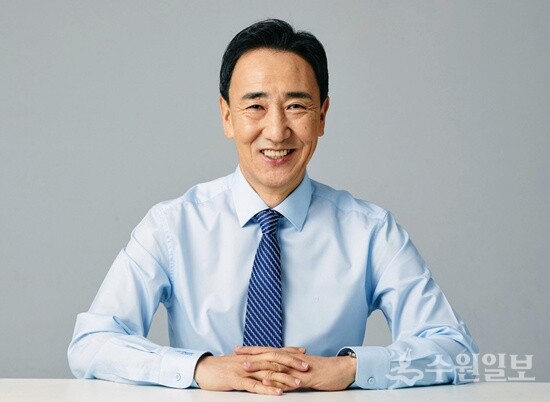
Yoon Ui-su, former Director of External Cooperation at the National Credit Union Federation, who joined the federation in 1994 and has spent over 30 years there, has thrown his hat in the ring for the 34th election for Chair of the National Credit Union Federation.
The 34th election for Chair of the National Credit Union Federation, conducted under the supervision of the National Election Commission, will see approximately 860 union presidents nationwide exercise voting rights. The election is drawing attention as candidates present solutions to address structural problems amid the current operational pressures facing credit unions, including prolonged high-interest-rate trends and rising delinquency rates.
Candidate Yoon has actively worked on policy consultations with the National Assembly and supervisory authorities and pursued legislative processes in the field, actively responding to major financial environment changes such as the foreign exchange crisis and global financial crisis. Known as someone who served as head and director of external cooperation at the National Credit Union Federation, he is recognized as having made significant contributions to amendments to the Credit Union Act and improvements in supervisory regulations.
Candidate Yoon stated, "I will make every effort to strengthen the central federation's business functions to create a structure where the federation's capacity translates into the stability and sustainability of unions."
This newspaper met with Yoon Ui-su, former Director of External Cooperation at the National Credit Union Federation, who points out that the crisis facing credit unions is not the failure of individual unions but a structural problem of failed institutional design, to hear his reasons for running.

The following is a question-and-answer session.
- You have worked at the central federation for over 30 years. What was your role?
▲ Rather than being someone who handles credit union issues after the fact, as someone who has designed institutions so that problems do not repeat, I have consistently pondered 'why does this burden remain only with unions?' and have strived to find answers in laws and institutions.
- In fact, the first area where you achieved results was the 'depositor protection system,' correct?
▲ Yes, immediately after the foreign exchange crisis, all financial institutions, including credit unions, faced a major crisis where their very existence was in question.
The government completely reorganized the depositor protection system, and in that process, a 'special contribution system' was introduced as a mechanism to have the financial sector share the burden of public fund injection.
With the 2002 amendment to the Depositor Protection Act, financial institutions were obligated to pay special contributions, but for mutuals like credit unions with weak self-revenue bases, the burden was structurally greater.
With this awareness of the problem, we persuaded the government and the National Assembly, and credit unions alone among financial institutions had their special contribution payment period reduced from 25 years to 12 years. Subsequently, through an amendment to the enforcement decree in 2007, we secured a 50% reduction in special contributions, and as a result, we were able to reduce union burden by more than approximately 700 billion won.
- Does this experience connect to your current vision?
▲ Yes. What is most important in times of crisis is 'time.' Institutions are devices that buy time for unions. If I become federation chair, rather than responding after a crisis strikes, I will focus on preemptively building structures that can absorb crises."
- Institutional reforms related to credit operations are also a major part of your track record.
▲ Through the 2003 amendment to the Credit Union Act, we allowed credit to non-members and gave the central federation credit functions. In 2020, we expanded the credit business area of unions, which had been tied to the former joint liability system, to the current wide-area system.
This was not merely deregulation but the foundation for credit unions to possess minimum functions as financial institutions.
- What are your plans for future credit policy?
▲ Now the question is not 'should we restrict or open credit,' but 'how can we stably secure quality credit to expand unions' revenue base.' In particular, the current household loan market is distorted toward banks.
I believe that instead of placing reasonable quantitative and structural constraints on bank household loans, we should reorganize roles so that mutual finance can take a more active role in household loans centered on real needs of ordinary and middle-class people.
In particular, household loans covered by Korea Housing Finance Corporation (HUG) guarantees should be handled exclusively by mutual finance institutions through system changes.
Through this, we can strengthen mutual finance's original role in serving the financial needs of ordinary people while creating a foundation for unions to secure stable quality credit.
In addition, we will work in parallel to expand linked loans at the central federation level and establish a credit operation support system for unions using the central federation network to structurally enhance unions' credit management capabilities."
- I understand you have also been involved in easing tax and cost burdens.
▲ In the 2008 amendment process to the Tax Exemption Limitation Act, I contributed to expanding the non-taxable limit on deposited funds and lowering the corporate tax rate for unions.
I believed we needed to create a foundation for unions to grow their assets through tax benefits to union members, and change the structure where unions' earnings leaked away through taxes.
- How will this experience be reflected in future federation operations?
▲ The key to central federation operations is 'from where and by whom should the burden be cut off.'
If I become federation chair, I will focus on examining the cost structure that has been repeatedly shifted to unions and structurally alleviating it one by one.
- How about improvements to the fund structure after 2018?
▲ In 2018, while serving as head of external cooperation, I introduced a target fund system to the depositor protection fund through an amendment to the Credit Union Act. Rather than building funds indiscriminately, we changed to a structure that manages long-term burden by setting target levels.
This system alone is expected to bring burden reduction effects of at least 700 billion won or more in the medium to long term.
- What additional directions do you envision regarding funds going forward?
▲ Funds should be a 'device for stability' rather than a 'symbol of uncertainty.'
We will transform from the current structure of providing support only after losses occur to a structure of proactively providing funds to unions in crisis, creating a fund system where unions do not need to be anxious.
- What are recent achievements and future plans?
▲ In 2020, along with the expansion of credit business areas, we established grounds for shared use of administrative information, broadening unions' business base and operational efficiency.
In 2022, through the establishment of new performance product operation limits, we had the validity of the central federation's MOU verified at the National Assembly level, and as a result, achieved early lifting of restrictions.
In 2023, by enabling the use of discretionary reserves for dividends and the compensation of statutory reserve losses, we established institutional mechanisms to maintain union trust even during periods when dividends are difficult.
The introduction of amendments to the Credit Union Act passed through the National Assembly's Committee on Government Administration in December, including the establishment of an asset management company and relaxation of standards for unions required to appoint standing auditors, marked the final task of my 31-year career as a central federation employee.
- What is your vision going forward?
▲ The central federation must transform from an agency that evaluates unions into an agency that protects unions.
I will strengthen the central federation's business functions to generate profits, and create a structure where those profits are returned through union support.
My vision is to create a system where unions do not have to endure alone.
- Finally, what would you like to say to union presidents?
▲ The current crisis is not the failure of any one union. It is a problem of structure and environment.
As someone who has dealt with credit union institutions throughout my life, I will absolutely create a structure where the central federation takes responsibility.