Kim Man-gon's Educational Column Can the Second National Education Committee Succeed?
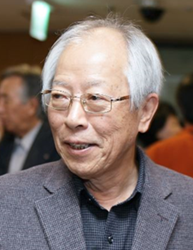
Did you see the news last January that the National Education Committee (Second Term), under the President's office, has launched? It's strange that given its incomparably important role, the atmosphere around it has been so quiet. We didn't even know what they had done, and if it were like the first term where the chair made unsavory headlines in the media, any ordinary task would have been hushed up and kept quiet…
I hope the second term will demonstrate shining achievements. Regardless of other matters, with successive governments, it's hard to tell what they've actually done about education. Even looking at just the college entrance system, they kept changing it, but ultimately we kept sinking deeper into a quagmire, only compounding confusion. I sometimes wished they would just leave it alone instead.
It goes without saying that secondary education cannot be properly conducted due to the College Scholastic Ability Test (CSAT) 'training' where students mechanically solve multiple-choice questions using endlessly accumulated memorized knowledge. It hardly needs emphasis that not only can such education not guarantee our future, but looking at how AI is infiltrating our lives yesterday and today, it's natural to have a sense of educational crisis.
With such thoughts, the fact that this National Education Committee is launching with an 'Public Education Innovation Report' that already includes mid-to-long-term college entrance system improvement plans is reassuring.
That report proposes dramatic college entrance system reforms. The conversion of the five-choice multiple-choice CSAT into five-tier absolute evaluation including descriptive and essay-type questions is groundbreaking in itself. For example, scores of 80 or above would be Grade 1, below 50 would be Grade 5. Moreover, high school internal grades are also being converted to five-tier absolute evaluation. When I think about how refreshing it is—thinking back to when our college admissions system would fiercely retort "98 points and 99 points are distinctly different!" and made endless improvements, only to suddenly step backward—just thinking about it feels exhilarating.
If the blueprint becomes reality—abolishing university-specific essay exams, integrating regular admission and regular admission cycles, dividing college entrance exams into quantitative and qualitative evaluation—Korea's college entrance system will achieve truly revolutionary innovation. Above all, I really want to see the once-almighty power of the CSAT weakened.
There's just one concern! Can it actually succeed? What processes might be pitfalls? Naturally, the method and procedure for gathering opinions. There was a time when college entrance policy was decided by emphasizing opinion consensus. Like a national referendum, so to speak—'fairly' giving one vote to an education scholar and one vote to an ordinary citizen! Isn't that absurd? That's how "let's do it fairly!" gets misinterpreted in the wrong direction. What is 'fairness'? That monster of 'fairness' that is best known and most widely recognized is setting up subjects with diverse characteristics—a monkey, an elephant, a fish, and others—and seeing who can climb a tree the best. That 'fairness' that even Einstein lamented in the 'distant past'!
Let me tell one more old story. There was a president who hadn't attended school much but understood education better than anyone. He told education ministry staff to 'drastically' reduce CSAT grade levels, and argued that S University is a good teaching school, not a university that selects the most excellent students. He said elementary students should study major subjects only in the morning, and in the afternoon freely study arts and physical education according to their interests and aptitudes at school, home, or in the community. He proposed that provincial education offices handle policy while municipal and district education offices be transformed into on-site support centers that help teachers.
What happened? Looking at our current education system, you can judge immediately. Those proposals, which we listened to with hearts pounding and filled with dreams, were barely realized. They reported that things didn't need to be changed, so they continued as before afterward, and most has remained maintained as is.
So what should we do this time? The more meticulous the plan, the better. Logic and data that can persuade anyone are needed, and with attention to those with vested interests, opinion-gathering should be conducted in an educational manner. There must also be ways to encourage those who dislike and are bothered by active implementation. They need to understand that this is a matter of national survival and destiny.
"Can they do it? Do they have the capacity to succeed?" Would it upset me to say this? I'm sorry, but I'd like to think a little provocation might be good.