Planning Series Medical Doctor Professor Lee Kyou-jae's 'Senior Water Care': Alkaline Ionized Water That Overcame Caustic Soda Misconceptions and Secured Food and Drug Administration 'Medical Device' Approval (#7)
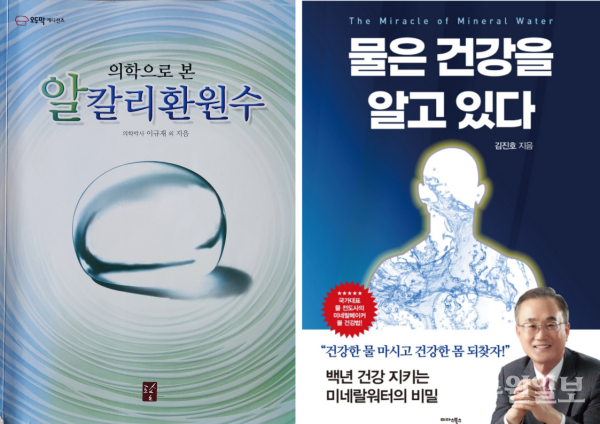
[News S=Reporter Kim Jin-ho] “Symbolic memories come to mind of how fiercely we clashed to shift the paradigm of Korea's water research from clean water to 'functional water that supports the body.' At that time, Korean society held very conservative perceptions about water.”
Medical Doctor Professor Lee Kyou-jae (Yonsei University Wonju College of Medicine) reflected on the immense barriers he faced as a scholar and the decisive medical evidence that overcame them as alkaline ionized water became officially registered as a medical device by our Food and Drug Administration (then the Korea Food and Drug Administration) and settled within the regulatory framework.
We investigated the fierce behind-the-scenes story of how alkaline ionized water—once misunderstood as a 'toxic substance'—could be reborn as a medically recognized substance by the state.
■ Historical Context of That Era: Barriers of the Ministry of Environment's 'Drinking Water Management Act' and Social Misunderstandings
The reporter asked Professor Lee about the circumstances when alkaline ionized water was first introduced domestically. Professor Lee noted two major barriers of that time, saying: “At that time, South Korea was bound by the Ministry of Environment's 'Drinking Water Management Act,' and the prevailing assumption was that water must be nothing but clean, transparent, plain water free of harmful substances.”
⊙ Conflicting Interests Between Government Agencies
At that time, the Ministry of Environment sought to strictly regulate the upper limit of pH (hydrogen ion concentration) as a safety standard, while the Food and Drug Administration withheld judgment on whether it should be regarded as an effective medical substance. Because consistent criteria between agencies were not established, the market and consumers inevitably faced severe confusion.
⊙ Ignorance and Resistance Toward Alkaline Water
In fact, not only among the general public but also among some experts, the word 'alkaline' sparked resistance, conjuring associations with caustic soda possessing strong toxicity, and baseless rumors spread that drinking too much water would disrupt the body's balance and harm the kidneys.
It was a dark period when the scientific fact that Japan had already approved electrolyzed water devices for medical use by the Ministry of Health, Labour and Welfare since 1966, with over ten million people safely consuming it for more than 40 years, was completely disregarded domestically.
■ Key Medical Evidence: Improvement in '4 Major Gastrointestinal Symptoms' and Official Registration as Class 2 Medical Device
The only key to breaking through such regulation and misunderstandings was 'concrete and objective medical data' alone. Professor Lee Kyou-jae's research team at Yonsei University Wonju College of Medicine conducted clinical trials and toxicological safety verification to elucidate the effects of alkaline ionized water on the human body.
As a result, they perfectly demonstrated that alkaline ionized water has remarkable efficacy in clinically improving the following '4 major gastrointestinal symptoms:'
⊙ Relief of Chronic Diarrhea
Normalizing the intestinal microbiota environment significantly reduced chronic diarrhea symptoms.
⊙ Improvement of Indigestion
Aided gastrointestinal motility and facilitated smooth decomposition and absorption of food.
⊙ Suppression of Abnormal Fermentation in the Gastrointestinal Tract
Suppressed abnormal proliferation of harmful bacteria and gas generation from putrefaction in the colon, confirming the effect of purifying the intestinal environment.
⊙ Relief of Acidity and Excessive Stomach Acid
Neutralizing excessively secreted gastric acid protected the stomach lining and effectively alleviated heartburn symptoms.
This concrete clinical evidence became the decisive medical milestone when the Food and Drug Administration (then the Korea Food and Drug Administration) officially approved and announced in 2007 that alkaline ionized water-generating devices were not merely water purifiers but 'Class 2 medical devices' that improve gastrointestinal symptoms.
■ Implications of Past Legacy for the Present: Popularization as Everyday Preventive Medicine
Professor Lee pointed out that while alkaline ionized water's registration as a medical device was a great achievement through such efforts at that time, on the other hand it also created a limitation of confining water within a narrow framework of 'medical devices for therapeutic purposes.'
“The principle through which water is rapidly absorbed through aquaporin, the water channel of cell membranes, and minerals are smoothly supplied throughout the body, is not just a benefit for patients with gastrointestinal diseases but also a daily necessity for all seniors suffering from chronic dehydration and cognitive decline. Now, rather than seeking expensive complex electrochemical medical devices, it is important to consume alkaline water with essential minerals such as magnesium and calcium naturally dissolved in it as part of everyday life.”
This is a suggestion that, upon the solid medical foundation built by Professor Lee's team in the past, water's value should now be popularized as everyday 'preventive medicine' rather than a specialized therapeutic domain. Changing just one glass of water that we drink unconsciously every day—that is precisely the wisest start to senior healthcare in preparation for a super-aged society.
Then, how is alkaline ionized water, which overcame regulatory barriers in the past, scientifically defending seniors today against their most feared enemy: 'diabetes and its complications'?
In the eighth installment next week, we will exclusively reveal the latest research results verified by Professor Lee's team at the molecular biological level. We will intensively cover how 'Mineral Maker's Magnesium Alkaline Ionized Water'—ionized through Korea's independent technology—protects kidney cells from hyperglycemia and improves insulin resistance, solutions for senior blood sugar management and its value as preventive medicine as a 'natural diabetes complication prevention agent without side effects.'