Kim Chung-young's Suwon Microscope (138) The Story Behind Seoho Overpass (Former Suwon City Council Speaker Song Jae-gyu)
On January 26 of this year, "Starfield Suwon" opened, creating quite a buzz in the Suwon area. Reports came in daily about the massive crowds at Starfield causing locals some inconvenience.
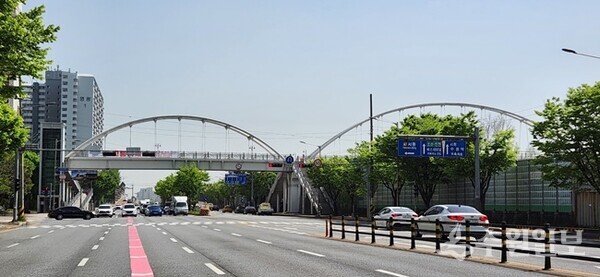
On April 30, I proposed a walk to Kim Woo-young, the editorial director at News S. Director Kim readily agreed. Before visiting Starfield, we decided to visit Seoho. Starting from Paldal-gu Office, we passed through Haengung Plaza and Hwaryeong-jeon, crossed through Hwaseo Gate, passed Yeongbok Girls' Middle School, went through Suseong-ro, crossed the road in front of Starfield, and entered Seoho Park by crossing the Seoho Overpass. Crossing the Seoho Overpass, memories came flooding back.
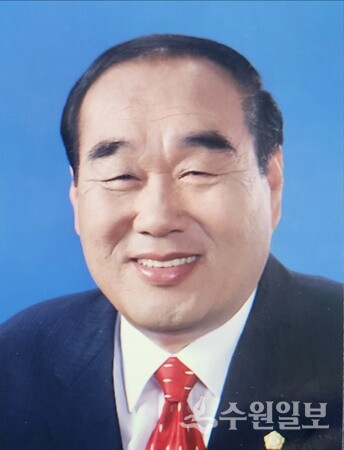
The Seoho Overpass is a masterpiece created through the dedication and passion of City Councilor Song Jae-gyu, whose district is Hwaseo 1-dong. The Seoho Overpass is the only passage for residents of Hwaseo-dong and Godeung-dong to access Seoho Park from the eastern region of Seoho, making its benefits to the area residents considerable.
Jo Cheol-hyung, a resident of Hyundai Apartments in Hwaseo-dong, praised the Seoho Overpass, saying, "Without the Seoho Overpass, the well-developed Seoho Park would have been like a picture in a book. Because the Seoho Overpass exists, I can take a walk in Seoho every day and enjoy a happy retirement. As the Seoho Overpass was built, apartment prices in the area also increased significantly."
The birth of the Seoho Overpass began after Shim Jae-deok became director of the Suwon Culture Center. He launched a campaign to "return Seoho to the citizens of Suwon."
Seoho, known as the Chukman Weir (祝萬堤), is a water conservation facility created by King Jeongjo after constructing Hwaseong to promote agriculture and establish a self-sufficient city. Along with the construction of Hwaseong, King Jeongjo first constructed the Manseok Reservoir and Daeyudun. These projects were highly successful. King Jeongjo subsequently constructed the Mannyeon Weir in front of Hyungnyung Mausoleum and then ordered Seo Yu-rin, the Hwaseong Provincial Governor, to construct reservoirs and duntjeon (state-run farms) to the west of Hwaseong. This resulted in the creation of the Chukman Weir and Seodun.
The Manseok Reservoir, Mannyeon Weir, and Chukman Weir of Suwon are representative agricultural water conservation facilities of Joseon. Seoho was famous as "Seoho Sunset," one of the Eight Scenic Views of Suwon, and was selected as the third most beautiful scenic site among 143 famous sites in Joseon in the "Historical Record of Famous Sites in Joseon" compiled during the Japanese colonial period.
The Chukman Weir and Seodun, agricultural infrastructure facilities built by King Jeongjo as agricultural promotion policies, became the catalyst for the establishment of an agricultural experiment station in Suwon during the Great Korean Empire period. Subsequently, the agricultural school developed into Seoul National University of Agriculture and the agricultural experiment station evolved into the Rural Development Administration, leading Suwon to develop as an agricultural research city.
The Chukman Weir used for agricultural water and the old pine trees on its embankment, along with Yeogi Mountain, became a recreational place for Suwon citizens and a dating destination for couples.
I also have many memories of Seoho. During my third year at Suwon Technical High School in October 1973, I began internships at the National Agricultural Products Quality Management Service's Agricultural Technology Research Institute (now the National Institute of Agricultural Sciences), and I spent over three years with Seoho until July 1976, just before my military service, giving me poignant memories.
The relocation of Gyeonggi Provincial Office to Suwon in 1967 led to a dramatic population increase. As a result, urban development accelerated, and with many people settling in the upstream areas of Seoho (Chukman Weir), pollution of Seoho became inevitable. At that time, our nation's economic situation did not allow for attention to wastewater treatment.
The Rural Development Administration, which manages Seoho, determined that restricting public access would reduce pollution, so it installed fences around Seoho and prohibited citizen access. As a result, Seoho became distant from public attention, and pollution worsened.
After taking office in 1987, Shim Jae-deok, director of the Suwon Culture Center, launched campaigns to revive Suwon Stream, the symbol of Suwon, and to return Seoho to the citizens of Suwon. In 1988, he published an article in the October issue of "Love Suwon" highlighting Seoho, which had become a "lake of death," drawing public attention.
With this momentum, residents of Seodun-dong began formally raising the issue of opening Seoho to the Rural Development Administration, but the RDA did not budge. Subsequently, the Suwon Culture Center and residents of Seodun-dong and Hwaseo-dong surrounding Seoho strongly pursued the Seoho opening movement.
At that time, Song Jae-gyu, who was then Resident Consultant Chair of Hwaseo 1-dong, also participated in efforts to restore and open Seoho.
The emergence of local government became a turning point in the Seoho opening movement. City Councilor Song Jae-gyu, elected from Hwaseo 1-dong, raised questions about protective measures for the scenic natural resources connecting Paldal Mountain, Sukji Mountain, and Yeogi Mountain at the "4th Council, 100th Suwon City Council (Special Session)" on September 17, 1991.
"As high-rise apartments are being constructed on the middle slopes of Sukji Mountain, Sukji Mountain is being overshadowed by apartments. The apartments appear taller than the mountain peaks, making Sukji Mountain feel oppressed and our hearts feel heavy. Are you developing plans to foster and protect the precious natural landscape connecting Paldal Mountain, Sukji Mountain, Seoho, and Yeogi Mountain?"
He also recommended to Suwon City that measures be taken to protect and open Seoho.
"Do you have plans to open Seoho to Suwon citizens? Significant changes are anticipated in the Hwaseo residential development project and areas surrounding Seoho. I recommend that we prepare in advance for potential Seoho pollution, save the dying Seoho through citywide civic action, open Seoho—the symbol of Suwon—to citizens, develop it as a space for civic recreation and sentiment cultivation, and foster an environment where we can build, love, and take pride in beautiful Suwon."
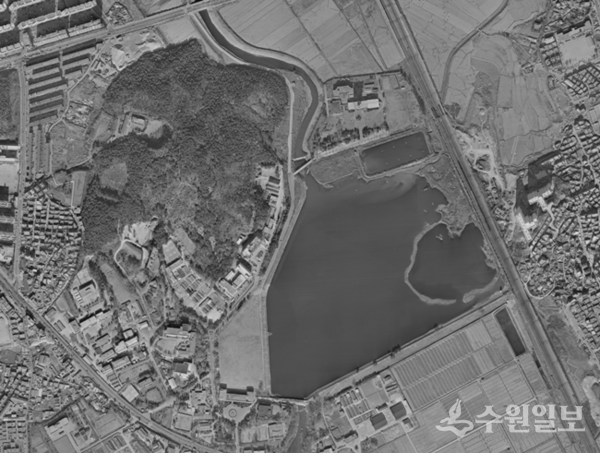
When the Rural Development Administration did not budge despite these efforts, Shim Jae-deok, director of the Suwon Culture Center, contributed an article to the Gyeonggin Daily on July 9, 1992, highlighting the problems of Seoho.
He pointed out several issues: whether Hangmi-jeong is being well preserved, whether Seoho's water surface remains as it once was, whether the above two were accomplished legally, why Seoho's Chukman Bridge was distorted, ignoring its original form, and constructed massively in concrete, and whether there is will to restore Seoho.
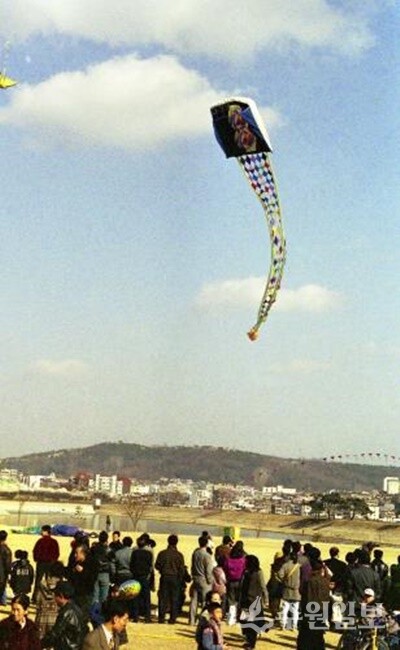
The seven-year effort to restore and open Seoho progressed actively when Shim Jae-deok, director of the Suwon Culture Center, was elected as mayor in the 1995 first civilian-elected mayoral election. The Seoho issue was resolved through consultation with the Rural Development Administration, which dredged contaminated soil accumulated in Seoho and opened it to the public. To commemorate this, a "World Kite Flying Festival" was held in 1996 as part of the "200th Anniversary of Hwaseong's Construction" celebration at the Rural Development Administration's sports field.
Although Seoho was opened, for residents of Hwaseo 1-dong, it remained a picture in a book. A 50-meter-wide Gyeongbu Railway ran along the Seoho waterfront, and a 40-meter-wide Deoknyeong-daero was constructed along the railway.
From this point on, City Councilor Song Jae-gyu insisted that an overpass crossing the Gyeongbu Railway and Deoknyeong-daero was necessary.
However, the Suwon City Road Division said "it's a road for park use, so it's the responsibility of the Parks and Green Space Division," and the Parks and Green Space Division responded "the construction of Deoknyeong-daero is not yet complete, so the Road Division should handle it."
City Councilor Song Jae-gyu came to me, then chief of the Urban Planning Division in the Urban Planning Department, to explain his frustration.
I suggested that in order to install the Seoho Overpass, securing a large budget would face many difficulties, so we should first secure the budget needed for a basic plan. For this reason, in 1994, the Urban Planning Division began the project by establishing a "Seoho Overpass" basic plan.
With the election of Mayor Shim Jae-deok in 1995, the Seoho Overpass project proceeded smoothly. However, the Railway Administration expressed concerns about safety regarding installing a support 40 meters above the Gyeongbu Railway. However, because National Assemblyman Lee Ho-jeong from Suwon was serving as chairman of the Construction and Transportation Committee at that time, we were able to persuade the Railway Administration and proceed with the project.
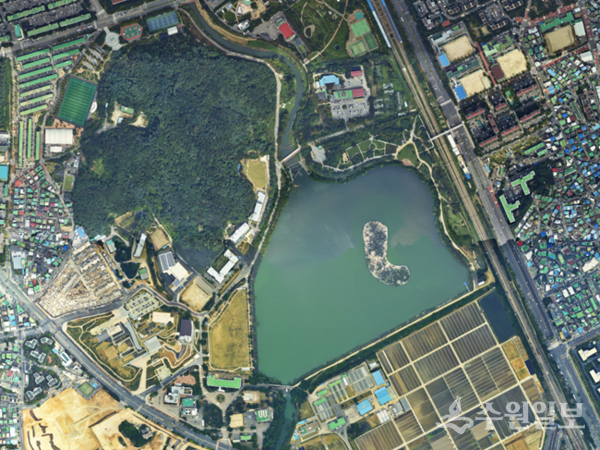
The Seoho Overpass is a result achieved through Mayor Shim Jae-deok's vision and City Councilor Song Jae-gyu's passion and persistent efforts.
Elected to the 4th Council in 1991 and serving through the 7th term for 16 years, former City Council Speaker Song Jae-gyu led an inconvenienced body through neighborhood patrols in his district, and with patience and perseverance, he systematically improved residents' grievances one by one, greatly contributing to the development of not only Hwaseo 1-dong but all of Suwon.
He currently serves as chairman of the Hwaseo Credit Union and has been elected four times to this position, dedicating over 30 years to serving the community. He deserves our applause for his passion and dedication.