Urgent Proposal 'Port Carbon Neutrality is a Necessity, Not a Choice'...Concrete Implementation Strategy Urgently Needed
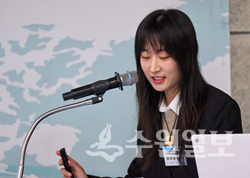
[News S= Kim Jong-sik, Senior Reporter] Amid growing global trends, the carbon-neutral transition of the shipping and port industry is no longer a choice but a necessity, and as the need for concrete implementation strategies and technological innovation measures becomes urgent, Gyeonggi Pyeongtaek Port Authority has drawn attention by hosting the 'Pyeongtaek Port Green Shipping Route Construction Strategy Forum.'
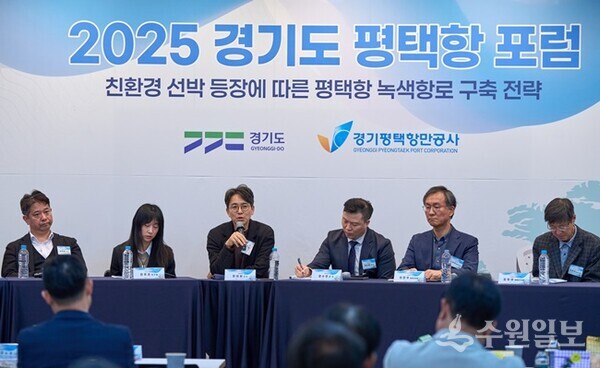
Gyeonggi Pyeongtaek Port Authority recently held the 'Pyeongtaek Port Green Shipping Route Construction Strategy Forum' in response to the emergence of eco-friendly vessels at the Seoul Trade Exhibition Convention Center seminar room, featuring presentations by six speakers including Han Joo-eun, Researcher of the Shipping Team at SFOC (Climate Solutions); Arne Strybos, Program Manager at Port of Antwerp-Bruges (Belgium); Yasuyuki Sakurai, Director of Eco-friendly Policy at Wallenius Wilhelmsen; Yoo Byung-yong, Executive Vice President at HD Hyundai Heavy Industries Future Technology Research Institute; Seo Dae-sik, Head Manager of HMM R&D Team; and Kim Sang-hyun, Head of Hyundai Motor's Hydrogen Business Planning Team.
They presented on Pyeongtaek Port's green shipping route strategy, overseas cases of eco-friendly ports, joint efforts by the car carrier industry for decarbonization, current status of hydrogen port development at Pyeongtaek Port, shipping companies' eco-friendly fuel strategies, and Pyeongtaek Port's port decarbonization promotion strategy, addressing overall issues and solutions for carbon-neutral transition.
According to researcher Han Joo-eun, 90% of global import and export trade volumes and 99.7% of Korea's trade are transported by ship, and the International Maritime Organization (IMO)'s international maritime greenhouse gas regulations aim for at least 20% reduction by 2030, at least 70% reduction by 2040, and zero emissions by 2050.
To achieve these goals, by 2030, coordination bodies must be formed among ports or terminals, shipping companies, fuel suppliers, and cargo owners to discuss ship deployment scale, port arrival dates, fuel demand and pricing conditions, thereby initiating green methanol vessel operations.
Furthermore, by 2040, through long-term expansion of port infrastructure investment, institutionalization of fuel subsidies and financial support systems, expansion of domestic production infrastructure, and fuel supply stabilization through bunkering coordination with major international ports (Singapore, Rotterdam, etc.), it is necessary to expand low-carbon and zero-carbon non-fossil fuel vessels and build a market ecosystem, he argued.
Arne Strybos, Program Manager at Port of Antwerp-Bruges, the world's fifth-largest bunkering port, presented 'overseas cases of eco-friendly ports' and explained that the port is implementing onshore power supply systems (AMP) for terminal operations and docked vessels, designing feasible fuel pathways, and considering various alternatives on a phased basis according to technological and economic viability rather than committing to a single fuel.
He also emphasized the importance of remembering that this is an uncharted path and approaching it with a learning mindset, adopting a "mound set" approach of starting small, confirming quickly, and continuously applying lessons.
He noted that support from the government, industry, and civil society is also necessary for this.
Yasuyuki Sakurai, Director of Eco-friendly Policy at Wallenius Wilhelmsen, a car carrier operator at Pyeongtaek Port, explained in his presentation that his company has been supporting the research report and networking for the 'Korea ↔ Europe Green Shipping Route' connecting Pyeongtaek and major European ports, as well as hosting workshops and supporting SFOC (Climate Solutions) presentations.
He emphasized that open, fair, and transparent cooperation is essential for decarbonization in the shipping industry, which is not easy to achieve, and that his company will continue to cooperate with various countries including Korea.
Yoo Byung-yong, Executive Vice President at HD Hyundai Heavy Industries Future Technology Research Institute, presented on 'current status of hydrogen port development at Pyeongtaek Port,' explaining that while hydrogen-powered eco-friendly ships have the disadvantage of requiring larger fuel tanks, commercialization is being pursued in Northern European small and medium-sized vessels, government vessels, government-led coastal passenger ships, and FEED vessels. He noted that Korea has hydrogen engines and high-pressure propulsion drive solutions prepared at HD Hyundai Heavy Industries, HD Infra Core, and HD Hyundai Heavy Industries.
Notably, he stated that Pyeongtaek Port serves as a hydrogen hub capable of becoming a domestic liquid hydrogen import terminal, positioning it as a critical node in the liquid hydrogen value chain with significant potential.
Seo Dae-sik, Head Manager of HMM R&D Team, presented on 'eco-friendly fuel transition strategy for shipping companies,' noting that while HMM is ordering new vessels using alternative fuels to achieve its environmental goals, there are economic challenges from the shipping company's perspective.
He pointed out that shipping companies need complex strategies to respond to various regulations, and failure to do so would result in significant difficulties including U.S. retaliatory measures, building a competitive supply chain, and R&D investments. He proposed that the government must establish a fuel supply system and respond proactively to changes.
Kim Sang-hyun, Head of Hydrogen Business Planning Team at Hyundai Motor Company, presented 'port decarbonization promotion strategy utilizing hydrogen energy,' proposing an integrated hydrogen ecosystem model linking transportation, energy, and port infrastructure.
He stated, "Pyeongtaek has a port and was designated as a hydrogen city, with high accessibility to the metropolitan area, making development possible."
Following the six themed presentations, a comprehensive discussion with moderator Professor Jung Tae-won from Sungkyul University and panelists including Min-woo Lee, Director of Logistics and Ports Division at Gyeonggi Province; Professor Jung Soo-hyun from Pyeongtaek University; and Kim Hyung-tae, Honorary Research Fellow at the Korea Maritime Institute (KMI), continued in-depth discussions on sustainable development of Pyeongtaek Port.
Professor Jung Soo-hyun from Pyeongtaek University identified high fuel costs and insufficient fuel supply sources as the biggest current obstacles.
Professor Jung stated, "Infrastructure development by the government is needed to supplement market imperfections," and "The roles of Gyeonggi Province and Gyeonggi Pyeongtaek Port Authority are important." When asked "specifically, what alternative fuel should be chosen," HMM Head Manager Seo Dae-sik responded, "While no one knows the future fuel, we cannot sit idle," emphasizing that while there is uncertainty, a medium to long-term perspective is necessary. Yoo Byung-yong, Executive Vice President at HD Hyundai Heavy Industries, mentioned the recent trend of mixed fuels (Fuel-mix).
He stated, "As it is difficult to commit to a single fuel, using a mixture of ammonia and methanol for large vessels is most advantageous when assuming complete net-zero, and since Pyeongtaek Port has competitiveness in hydrogen, it would be good to leverage this," he said.
Kim Seok-gu, President of Gyeonggi Pyeongtaek Port Authority, which organized the event, said, "Pyeongtaek Port is a national port with a hydrogen transportation complex hub and has the potential to expand the hydrogen energy ecosystem to major ports across the nation," and "I hope that today's presentations and discussions will serve as a springboard for Pyeongtaek Port to leap forward as an eco-friendly port leading a sustainable maritime logistics ecosystem."